For years, local enterprises viewed cybersecurity as an optional expense. However, in recent times, this passive approach has completely collapsed.
As of 2026, Cybersecurity in Nepal is getting serious attention because daily operations are now heavily digital.
Banks and wallets depend on online transactions, telecom companies handle large volumes of customer identity data, and more businesses are using cloud tools for email, storage, and customer management.
With that shift, common threats, phishing, ransomware, account takeovers, and data leaks have become practical business risks, not just IT problems.
Because cybersecurity has become a real business need, more organizations are now budgeting security tools and dedicated teams.
That broader focus is directly impacting salaries in 2026. Pay is rising, but it’s also becoming more skill-sensitive.
While demand is increasing, the market rewards ready-to-work skills. Today, two professionals with the same “years of experience” can earn very different amounts depending on the practical, specialized skills they bring to the table.
Skills Required for a Cybersecurity Career
A successful cybersecurity career requires a combination of technical knowledge and analytical skills.
Key technical skills include:
- Network and system security
- Vulnerability assessment
- Security monitoring and incident response
- Ethical hacking fundamentals
- Cloud security
- Risk management
- Security tools and frameworks
- Important soft skills include:
- Problem-solving
- Critical thinking
- Communication
- Attention to detail
- Decision-making under pressure
Educational institutions and training centers play an important role in helping individuals develop cybersecurity skills.
For example, AITC Education offers cybersecurity courses that combine theoretical knowledge with hands-on training, industry-recognized certifications, soft skills development, and practical projects.
Many programs also provide career guidance and job placement support to help learners prepare for opportunities in the cybersecurity field.
Skills That Can Increase Your Salary
Some cybersecurity skills are in higher demand than others and often lead to better-paying roles.
- Cloud Security Expertise: Companies are rapidly adopting AWS, Azure, and Google Cloud, increasing demand for professionals who can secure cloud environments and manage cloud-related risks.
- Ethical Hacking and Penetration Testing: Ethical hackers identify security weaknesses before attackers can exploit them, making penetration testing one of the most valuable cybersecurity skills.
- Incident Response and Threat Hunting: Organizations need professionals who can quickly detect, investigate, and respond to security incidents while proactively searching for potential threats.
- Security Certifications: Certifications such as Security+, CEH, CISSP, and CISM help validate expertise and can improve job prospects and salary potential, especially when combined with practical experience.
- Hands-On Project Experience: Practical experience gained through security audits, penetration testing, SOC operations, or real-world security projects is highly valued by employers.
Cybersecurity Career Levels and Salary Range in 2026
Cybersecurity salaries generally increase with experience, technical expertise, and responsibility.
1. Intern / Trainee
Interns and trainees primarily assist with security monitoring, documentation, vulnerability scans, and basic security tasks while learning industry tools and processes.
Strong learning ability and attention to detail help accelerate career growth.
2. Entry-Level Professional (0–2 Years): Approx. NPR 25,000–50,000/Month
Common roles include Junior Security Analyst, Junior SOC Analyst, and IT Security Support.
Employers expect a basic understanding of security concepts, alert monitoring, incident reporting, and security best practices.
3. Mid-Level Specialist (2–5 Years): Approx. NPR 60,000–120,000/Month
Mid-level professionals work more independently, handling security assessments, system hardening, vulnerability management, and incident investigations.
They are expected to improve security processes and solve operational security challenges.
4. Senior Cybersecurity Professional (5+ Years): Approx. NPR 150,000–300,000+/Month
Senior professionals lead security initiatives, manage complex incidents, mentor junior team members, and contribute to security architecture and risk management decisions.
5. Security Architect / Manager
Security Architects and Managers focus on security strategy, system architecture, compliance, risk management, and team leadership.
They help organizations build long-term security programs and are typically among the highest-paid cybersecurity professionals.
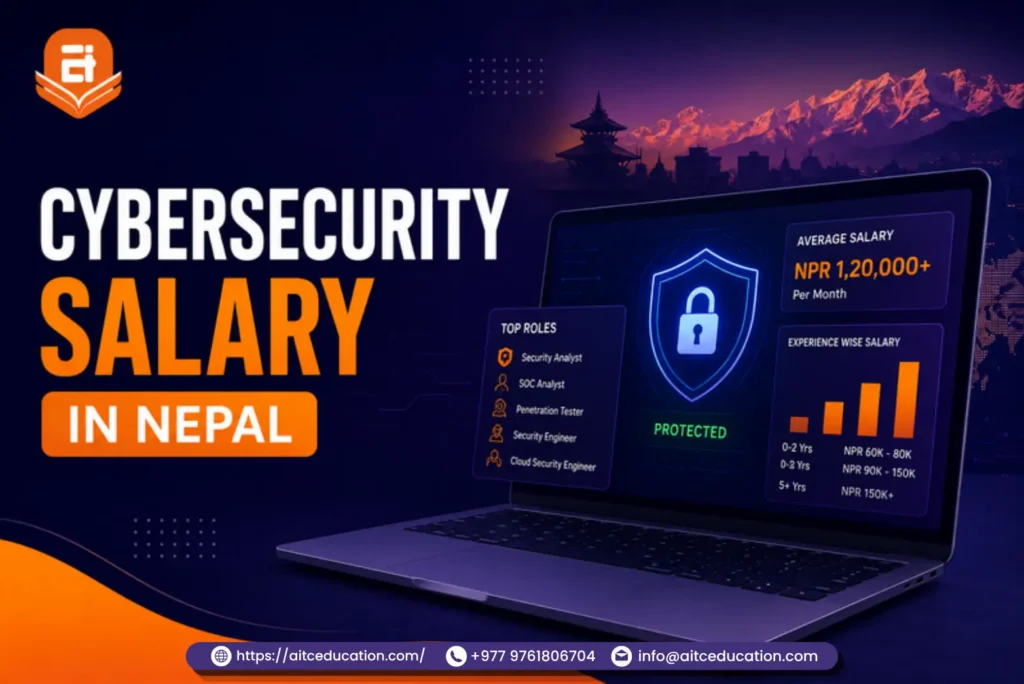
| Career Level | Experience | Avg Monthly Salary (Nepal) |
| Intern / Trainee | 0–1 year | NPR 15,000 – 30,000 |
| Entry-Level Professional | 0–2 years | NPR 25,000 – 50,000 |
| Mid-Level Specialist | 2–5 years | NPR 60,000 – 120,000 |
| Senior Cybersecurity Professional | 5+ years | NPR 150,000 – 300,000+ |
| Security Architect / Manager | 7+ years | NPR 250,000 – 500,000+ |
Factors That Influence Cybersecurity Salaries
Several factors determine how much cybersecurity professionals earn.
Experience and Technical Expertise
Professionals with proven experience handling complex security challenges generally command higher salaries.
Employers often prioritize demonstrated skills over years of experience alone.
Certifications
Relevant certifications can improve credibility and increase opportunities for promotions, leadership roles, and specialized positions.
Industry and Company Size
Large enterprises, financial institutions, telecom providers, and multinational companies often offer higher salaries due to greater security requirements and larger technology budgets.
Specialized Security Skills
Specialization usually pays better than “I do a bit of everything.”
Skills in cloud security, penetration testing, security architecture, DevSecOps, and threat intelligence often attract premium compensation.
Remote Work Opportunities
Remote work has expanded access to international cybersecurity positions. Professionals working with foreign clients or international companies can often earn significantly more than local market rates.
Most In-Demand Cybersecurity Specializations
These specializations are most in demand in Nepal because they match the problems companies face every day.
More organizations are using cloud services, online payments, and customer databases, so they need people who can protect access, monitor suspicious activity, and respond quickly to incidents.
Attacks like phishing, ransomware, and account hacking are common, so skills that help detect and stop them are prioritized.
1. Cloud Security
Cloud security professionals protect cloud-based infrastructure, applications, and data. This specialization continues to grow as cloud adoption increases.
2. Ethical Hacking
Ethical hackers identify vulnerabilities before cybercriminals can exploit them. Organizations frequently hire these specialists for security testing and assessments.
3. Application Security
Application security focuses on securing software throughout the development lifecycle. As businesses develop more digital products, demand for AppSec professionals continues to rise.
4. DevSecOps
DevSecOps integrates security into software development and deployment processes. Companies increasingly seek professionals who can automate security testing and compliance checks.
5. Digital Forensics and Incident Response
These specialists investigate cyberattacks, collect evidence, analyze compromised systems, and help organizations recover after security incidents.
6. AI Security
As artificial intelligence becomes more common, organizations require professionals who can secure AI systems, protect training data, and manage AI-related security risks.
Cybersecurity Job Market and Future Outlook
The long-term outlook for cybersecurity careers remains highly positive due to increasing digital transformation and evolving cyber threats.
Current Hiring Trends
Organizations across Nepal are actively hiring Security Analysts, SOC Analysts, Security Engineers, Cloud Security Engineers, and Compliance Specialists.
Demand is particularly strong in banking, fintech, telecommunications, healthcare, and IT outsourcing companies, where protecting customer data and critical systems has become a business priority.
For example, banks and digital payment providers require security teams to monitor transactions, detect fraud attempts, and maintain compliance with regulatory requirements.
As more businesses move services online, the need for cybersecurity talent continues to grow.
Remote Work Opportunities
Remote work has opened new opportunities for Nepali cybersecurity professionals.
Many companies now hire security talent regardless of location, allowing professionals to work for international organizations while remaining in Nepal.
Roles such as Security Analyst, Penetration Tester, Cloud Security Engineer, and Incident Response Specialist are increasingly available through remote employment and consulting opportunities.
These positions often provide exposure to global security standards and can offer significantly higher compensation than local roles.
Future Demand for Cybersecurity Professionals
The demand for cybersecurity professionals is expected to remain strong as organizations continue adopting cloud technologies, digital services, artificial intelligence, and remote work systems.
At the same time, cyber threats are becoming more sophisticated, requiring businesses to invest in stronger security measures.
As a result, organizations are increasingly looking for professionals who can secure cloud environments, investigate incidents, meet compliance requirements, and reduce operational security risks.
Career Growth Beyond 2026
Cybersecurity offers multiple career paths beyond technical roles. Professionals can advance into positions such as Security Manager, Security Architect, Cybersecurity Consultant, Risk Manager, or Chief Information Security Officer (CISO).
Emerging fields such as AI Security, Cloud Security, Threat Intelligence, and Cyber Risk Management are also creating new opportunities for specialization.
Professionals who continuously develop their technical and leadership skills are likely to benefit from stronger career growth and higher earning potential in the years ahead.
Conclusion
Cybersecurity has become one of the most promising technology careers in Nepal. Rising cyber threats, increasing digital adoption, and a shortage of skilled professionals are driving both demand and salary growth.
Professionals who continuously develop specialized security skills and gain practical experience are likely to see stronger career growth and earning potential.
With continuous learning and practical experience, cybersecurity can offer long-term stability, competitive salaries, and access to international opportunities.
Frequently Asked Questions
Why are cybersecurity salaries increasing in Nepal?
Cybersecurity salaries are increasing because organizations face growing cyber threats and need skilled professionals to protect their systems, networks, and data.
Which cybersecurity role pays the highest salary?
Security Architects, Cybersecurity Managers, Cloud Security Engineers, and senior penetration testers are among the highest-paid cybersecurity professionals.
What skills are most valuable in cybersecurity?
Cloud security, ethical hacking, incident response, DevSecOps, application security, and threat intelligence are currently among the most valuable skills.
Do cybersecurity certifications increase salary?
Certifications can improve career opportunities and earning potential, especially when combined with practical experience and technical expertise.
Can Nepali cybersecurity professionals work remotely for international companies?
Yes. Many cybersecurity professionals work remotely for international organizations, security consultancies, and managed security service providers.
Is cybersecurity a good career for beginners?
Yes. The field offers strong job demand, continuous learning opportunities, and clear career progression for individuals interested in technology and security.