Course Overview
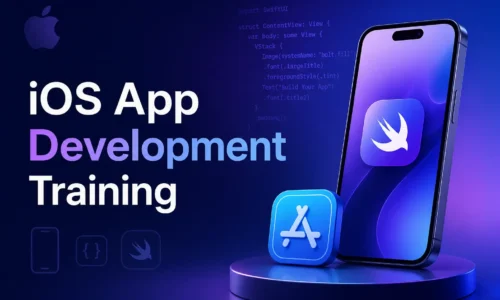
Looking to build a career in iOS app development and create modern, high-performance mobile applications for Apple devices? Our iOS Application Development Training in Nepal is designed for students, graduates, and aspiring developers who want to master mobile app development using Swift and Apple’s development frameworks.
This industry-focused training program covers Swift programming, Xcode, UIKit, SwiftUI, app architecture, user interface design, API integration, data persistence, authentication systems, Firebase integration, app testing, debugging, and real-world iOS application development projects. Through hands-on coding exercises and practical assignments, you will learn how to design, develop, and deploy professional iPhone and iPad applications.
Whether you are a beginner in mobile development or looking to expand your programming expertise, this course provides a structured learning path to develop job-ready skills. By the end of the training, you will have a portfolio of real-world iOS applications and the confidence to pursue opportunities as an iOS Developer, Mobile App Developer, Swift Developer, or Freelance App Builder.
Instead of focusing only on theory, you will:
- Build real-world iOS applications used on iPhone and iPad
- Learn how to design modern, responsive mobile app interfaces using SwiftUI and UIKit
- Understand Swift programming fundamentals and object-oriented concepts
- Work with APIs to fetch and display real-time data in apps
- Store and manage data using Core Data and local storage techniques
- Test, debug, and optimize apps for performance and user experience
This course provides a strong practical foundation to build professional iOS apps, work on real projects, and start your career in mobile app development.
Why Choose iOS Development Training from AITC Education
Project-Based Learning Approach
Work on real iOS apps including utility apps, social apps, and business applications
Industry-Relevant Skills
Learn how modern iOS apps are built and maintained in real development environments
Strong Portfolio Development
Build multiple iOS applications to showcase your skills to employers and clients
Hands-on Practical Training
Focus on real app development instead of only theoretical concepts
Career-Focused Learning
Develop skills needed for mobile development jobs and freelance app projects
Flexible Learning Options
Available in both online and physical classroom formats
What You Will Be Able to Do After IOS app development Course
By the end of this training, you will be able to:
- Build iOS applications using Swift
- Design user interfaces using SwiftUI and UIKit
- Create interactive and responsive mobile app screens
- Connect apps with APIs and external services
- Store and manage data locally using Core Data
- Debug and optimize mobile applications
- Publish apps to the App Store
- Work independently on complete iOS app projects
Tools and Technologies You Will Use
- Swift – Core programming language for iOS development
- SwiftUI – Modern UI framework for Apple apps
- UIKit – Traditional iOS UI framework
- Xcode – Official Apple development environment
- Core Data – Local data storage system
- REST APIs – Data integration and backend communication
- Git & GitHub – Version control system
Who This iOS Development Course is For
- Students interested in building iPhone and iPad applications
- Developers shifting into iOS development
- Freelancers looking to build mobile apps for clients
- Anyone interested in creating apps for the Apple ecosystem
Career Opportunities After iOS Development Training in Nepal
After completing this course, you can work as:
- iOS Developer
- Mobile App Developer (iOS)
- Swift Developer
- Freelance App Developer
- Junior Software Engineer (iOS)
Opportunities are available in:
- IT companies and software firms in Nepal
- Mobile app development agencies
- Startups building iOS products
- Freelancing platforms like Upwork and Fiverr
- Independent client-based app development
Portfolio Development Projects
During the course, you will work on:
- To-do list / productivity app
- Weather application using API
- E-commerce mobile app
- Chat or social media app prototype
- Location-based service app
- Final capstone iOS application project
These projects will help you showcase your skills to employers and clients.
Certification
You will receive a Certificate of Completion after successfully finishing the course and completing all required projects.
Syllabus
- 11 Sections
- 43 Lessons
- 10 Weeks
- Introduction to iOS Development3
- 1.1Mobile app development overview
- 1.2iOS ecosystem and Apple platforms
- 1.3Xcode setup and tools
- Swift Programming Basics5
- 2.1Variables, data types, operators
- 2.2Control flow (loops, conditions)
- 2.3Functions and closures
- 2.4Object-Oriented Programming (OOP)
- 2.5Structs, classes, enums
- Xcode & UI Design Basics4
- 3.1Xcode project structure
- 3.2Storyboards and Interface Builder
- 3.3Auto Layout & constraints
- 3.4UI components (buttons, labels, images)
- UIKit Development4
- 4.1App navigation structure
- 4.2TableView & CollectionView
- 4.3Navigation controllers
- 4.4Alerts, gestures, animations
- SwiftUI Development (Modern iOS UI)4
- 5.1SwiftUI fundamentals
- 5.2State management
- 5.3Navigation in SwiftUI
- 5.4Building dynamic interfaces
- Data Handling & Storage4
- 6.1UserDefaults
- 6.2Core Data basics
- 6.3File storage
- 6.4Local data management
- API Integration4
- 7.1REST API basics
- 7.2JSON parsing
- 7.3Fetching live data
- 7.4Networking using URLSession
- App Architecture3
- 8.1MVC pattern
- 8.2MVVM introduction
- 8.3Clean coding practices
- Advanced Features4
- 9.1Push notifications
- 9.2Location services & maps
- 9.3Camera & media integration
- 9.4App lifecycle management
- App Publishing & Deployment4
- 10.1App Store guidelines
- 10.2TestFlight testing
- 10.3App signing & provisioning
- 10.4Publishing on App Store
- Bonus: Career & Freelancing Preparation4
- 11.1Portfolio building
- 11.2Git & GitHub basics
- 11.3Interview preparation
- 11.4Freelancing platforms introduction