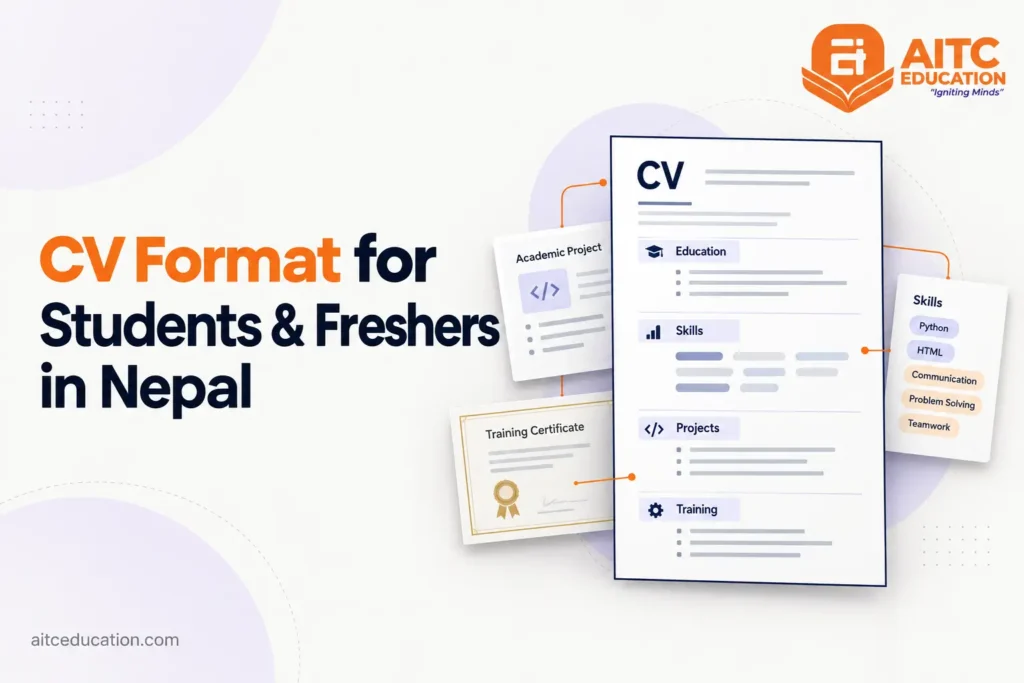
A good CV for students and freshers in Nepal does not need years of work experience. Instead, it should highlight your education, job-related skills, academic projects, internships, training, and other activities that show what you can contribute to a job.
If you have little or no work experience, use a skills-based CV format that puts your education and strongest skills near the top instead of leaving a large empty work-experience section. The key is to show relevant evidence of what you have learned and done.
This guide explains what to include in a student or fresher CV, what can count as experience, how to write each section, and how to structure your first CV for a job application in Nepal.
What Should a Fresher CV in Nepal Include?
A fresher CV should include the information an employer needs to understand your background and potential for the role. You can structure it around these sections:
- Contact information: Your name, phone number, email address, and relevant professional links such as LinkedIn or a portfolio.
- Career objective or summary: A short statement about your background, relevant skills, and the type of opportunity you are seeking.
- Education: Your current or completed qualifications, including SEE, +2, bachelor’s degree, or other qualifications that support your application.
- Skills: Technical and soft skills that match the job role.
- Projects and practical experience: Academic projects, personal projects, internships, freelance work, or practical training.
- Certifications and short courses: Relevant courses or certifications that support your application.
- Activities and achievements: Volunteer work, student clubs, leadership roles, competitions, or other relevant achievements.
You do not need to include every possible section. Choose the sections that give an employer useful evidence about your suitability for the particular job.
For most students and freshers, education and job-related skills should appear before work experience, especially when there is little formal employment history to show. Your projects, internships, and other practical work can then provide evidence of how you have applied those skills.
What Counts as Experience on a Fresher CV?
If you have not had a full-time job, you can still include activities that show how you have applied your knowledge and developed useful skills. These may include academic projects, internships, practical training, freelance or personal projects, volunteer work, and student leadership.
1. Academic Projects
Academic projects can demonstrate how you used what you learned to complete a practical task. For example, a computing student could include a website, software project, database project, or research assignment that relates to the job.
Focus on what you did, which tools or skills you used, and what you produced rather than simply listing the project title.
2. Internships and Practical Training
Internships and practical training provide direct exposure to workplace tasks, even if they were unpaid or part of your studies. Include the organization, role or training area, dates, and the main tasks you handled.
If you completed practical training through a course, include it when the work relates to the position you are applying for.
3. Freelance and Personal Projects
Freelance work can demonstrate experience working on real tasks for clients, while personal projects can show initiative and practical ability. Examples could include designing social media posts, building a website, managing a small online project, writing content, or creating a portfolio.
You do not need to have earned money from a project for it to be useful on your CV. What matters is whether it demonstrates a skill that the job requires.
4. Volunteer Work and Student Leadership
Volunteer work, student clubs, event organization, and leadership roles can show skills such as communication, teamwork, organization, and responsibility.
Include these activities when they relate to the position or help demonstrate a skill the employer is looking for. You do not need to list every club or activity you have participated in.
How to Write Each Section of a Student or Fresher CV?
Once you know what information belongs on your CV, the next step is to present each section clearly. Keep the details focused on the job and use specific information instead of simply listing what you have studied or completed.
1. Education
List your most recent or current qualification first. Include the institution, course or degree name, and study period or expected completion date.
If you are still studying, write the qualification as “Bachelor of [Subject] — Expected [Year]” rather than leaving the completion date unclear.
You can also include coursework, academic achievements, or subjects when they directly relate to the position.
2. Skills
List skills that match the job requirements instead of creating a long list of everything you have learned. Separate technical skills from other relevant skills when this makes the section easier to read.
For example, a student applying for a digital marketing position might list SEO, content writing, Google Analytics, social media management, and Canva if they have actually learned or used these skills.
Avoid claiming advanced proficiency in a skill you have only studied briefly. Your projects and other practical work can provide evidence of how you have used the skills you list.
3. Projects and Practical Experience
This section can replace a traditional work-experience section when you have limited employment history. Include the project or activity name, your role, the tools or skills you used, and what you completed.
For example:
Personal Website Project
- Built a personal portfolio website using WordPress.
- Customized the layout and added project pages.
- Applied basic SEO practices to improve page structure.
Use specific actions such as built, designed, analyzed, researched, created, managed, or developed instead of vague statements such as “learned about WordPress.”
4. Certifications and Short Courses
Include certifications and short courses that are relevant to the job you are applying for. Add the course or certification name, provider, and completion year or status.
If the course taught specific skills that are relevant to the role, you can also mention those skills briefly. Avoid listing unrelated courses simply to make your CV look more complete.
5. Other Relevant Activities
Include volunteer work, student clubs, competitions, leadership roles, or other activities when they demonstrate skills relevant to the job.
For example, organizing a college event could demonstrate planning and teamwork, while leading a student club could show communication and leadership. Keep this section short if these activities do not add much to your application.
Student and Fresher CV Example
A fresher’s CV does not need to look empty because you have not held a full-time job. The example below shows how a student can use education, skills, projects, and relevant activities to build a complete CV.
This example is only a structure. The sections, skills, projects, and activities should be replaced with your own information and adjusted to match the job you are applying for.
For example, a student applying for a digital marketing position would highlight relevant projects, SEO, content writing, social media, analytics, or other related skills instead of copying the technical skills in this example.
Common Mistakes Students and Freshers Make
1. Leaving the Work Experience Section Empty
If you have no formal employment history, do not leave most of the CV blank. Use projects, internships, practical training, freelance work, or other activities to show what you have done.
2. Using a Generic Career Objective
Avoid statements such as “I am a hardworking and motivated person looking for a challenging position.” They do not tell the employer what you can contribute. Instead, mention your background, skills that match the role, and the type of role you are seeking.
3. Listing Skills Without Evidence
Writing “good at Python” or “expert in SEO” does not show how you developed or used the skill. Whenever possible, support important skills with projects, coursework, internships, certifications, or other practical work.
4. Adding Too Much Unrelated Information
Your CV does not need to include every course, activity, hobby, or achievement you have completed. Prioritize information that supports your application.
5. Exaggerating Skills or Experience
Do not describe yourself as advanced or experienced in something you have only studied briefly. Be accurate about your level of knowledge and be prepared to discuss anything you include during an interview.
6. Ignoring the Job Description
A CV should not be identical for every application. If a job description emphasizes particular skills or qualifications that you genuinely have, make those details easy to find in your CV.
7. Forgetting to Proofread
Spelling mistakes, incorrect contact details, inconsistent formatting, and broken links can make an otherwise good CV look careless. Check your CV carefully before submitting it.
What If You Have Almost Nothing to Put on Your CV?
If you have little education, no work experience, and few projects or activities, your CV will naturally be shorter. Do not fill the space with unrelated information or skills you cannot support.
Instead, focus on what you have already done and identify small but relevant ways to build evidence for future applications.
CV Format for SEE and +2 Students
If you are still in school or have recently completed SEE or +2, your education will usually be one of the main sections of your CV. Include your school or college, qualification, completion year or expected completion year, and relevant academic achievements.
You can also include school projects, competitions, volunteering, clubs, leadership activities, computer skills, language skills, or other achievements when they are relevant to the opportunity.
For example, a student applying for an entry-level retail position could mention participation in school events or activities that demonstrate communication, teamwork, or responsibility.
What If You Have No Projects or Activities?
You do not need to invent experience just to make your CV look complete. If you have not completed any projects or relevant activities yet, keep your CV focused on your education and genuine skills.
You can also start building practical experience before your next application. A small personal project, volunteer activity, practical assignment, or short course can give you something specific to discuss and add to your CV later.
The goal is not to make a fresher CV look like an experienced professional’s CV. It is to present your current background honestly while showing evidence of the skills you are beginning to develop.
How to Tailor a Fresher CV to a Job?
A fresher CV should reflect the requirements of the specific job you are applying for. You do not need to create a completely different CV each time, but you should adjust the information you highlight.
Start by reading the job description and identifying the skills, qualifications, tools, and other requirements the employer mentions. Then check which of those you genuinely have.
For example, if a digital marketing vacancy asks for SEO, content writing, and social media skills, place those skills where they are easy to find and highlight projects or coursework that demonstrate them.
You can tailor your CV by:
- Reordering information: Put the most relevant skills, projects, or qualifications where the employer is likely to notice them quickly.
- Adjusting your skills section: Highlight skills you actually have that match the job requirements.
- Selecting relevant projects: Give more space to projects that demonstrate abilities needed for the position.
- Updating your career objective: If you use an objective, make it specific to the type of role rather than using the same generic statement for every application.
- Removing irrelevant details: If something does not support your application, consider leaving it out.
Tailoring does not mean copying keywords from a job description or claiming skills you do not have. The information on your CV should remain accurate and reflect your actual education, skills, and experience. If you want guidance on CV formats for different types of jobs in Nepal, see our Nepali CV Format Guide.
Build Your CV With a CV Maker
Once you have your information ready, a CV maker can help you organize it into a clear, professional format without building the layout from scratch.
AITC Education’s CV Maker lets you choose a template, add and reorder sections, preview your CV, and export the finished document as a PDF. You can use it to create a student or fresher CV based on the information and examples in this guide.
Conclusion
A strong CV for students and freshers does not depend on having years of work experience. It should clearly present your education, job-related skills, projects, internships, training, and other activities that show what you can contribute.
If you have little experience, focus on evidence rather than trying to make your CV look more impressive than your actual background. Keep the information focused on the job, tailor your CV to each application, and make sure everything you include is accurate. As you gain more projects, practical experience, and qualifications, your CV can grow with you.
Frequently Asked Questions
What is the best CV format for a fresher?
A skills-based CV format can work well for freshers because it gives more space to skills, education, projects, and practical experience when formal employment history is limited.
How long should a student or fresher CV be?
For most students and freshers, one page is usually enough if you can present your key information clearly. If you have enough relevant projects, internships, or other experience, a longer CV may be appropriate.
Should I include a photo on a fresher CV in Nepal?
A photo is not a universal requirement. Include one only when the employer or application instructions specifically request it.
Can I put academic projects on my CV?
Yes. Academic projects can demonstrate how you applied your knowledge and developed job-related skills. Include projects that relate to the position and briefly explain what you did and which skills or tools you used.
Should I include a cover letter with my fresher CV?
Include a cover letter when the job application requests one or when it gives you an opportunity to explain your interest and relevance to the role. Keep it specific to the position rather than sending the same generic letter with every application.