
Knowing accounting theory is important, but it is not enough to become job-ready. Accountants in Nepal also need practical skills such as bookkeeping, bank reconciliation, VAT and TDS work, financial reporting, and the ability to use accounting software confidently.
The right tools matter just as much as the accounting knowledge behind them. Learning software such as Tally/TallyPrime and Excel can help you handle everyday accounting tasks, while understanding IRD’s online systems is useful for tax and compliance work.
This guide covers the accounting skills and tools you should prioritize if you want to build or improve your accounting career in Nepal. It also explains what to learn first, what can wait, and which practical and soft skills can help you perform better at work.
The Non-Negotiables: Bookkeeping, VAT/TDS Filing, and Bank Reconciliation
For businesses in Nepal, strong accounting starts with accurate bookkeeping, timely VAT and TDS filing, and regular bank reconciliation. These core accounting tasks help businesses maintain reliable financial records, meet Nepal’s tax compliance requirements, and keep cash-flow information accurate.
Whether you are a small business, growing company, or accounting professional in Nepal, understanding these processes is essential for managing finances and avoiding common compliance issues.
1. Bookkeeping
Bookkeeping is one of the first skills an accountant needs because it involves recording and organizing a business’s financial transactions. This includes recording sales, purchases, expenses, payments, receipts, and other transactions accurately.
You should also know how to maintain ledgers, prepare basic records, and keep financial information organized. A strong understanding of bookkeeping makes it easier to prepare reports, reconcile accounts, and handle other accounting tasks correctly.
2. VAT/TDS Filing
Accountants working in Nepal should understand how VAT and TDS work and how the related records and filings are handled. This includes knowing which transactions are subject to VAT or TDS, maintaining the necessary records, and using the Inland Revenue Department’s systems for applicable tax-related work.
You do not need to memorize every tax rule before starting an accounting job. However, you should understand the basic process and know where to check the current requirements when handling VAT or TDS-related tasks.
3. Bank Reconciliation
Bank reconciliation means comparing a company’s accounting records with its bank statement and identifying differences between them. An accountant may need to find missing transactions, bank charges, timing differences, or recording errors and make the necessary adjustments.
This is a basic but important skill because even a small error in the records can affect the accuracy of financial information. You should be able to complete a bank reconciliation, identify why balances differ, and correct the records when needed.
In a practical accounting test, you may be given a bank statement and company records with differences and asked to identify the cause. Being able to find and explain these differences shows that you understand the process, not just the definition.
The Software Layer: What to Learn First and What Can Wait?
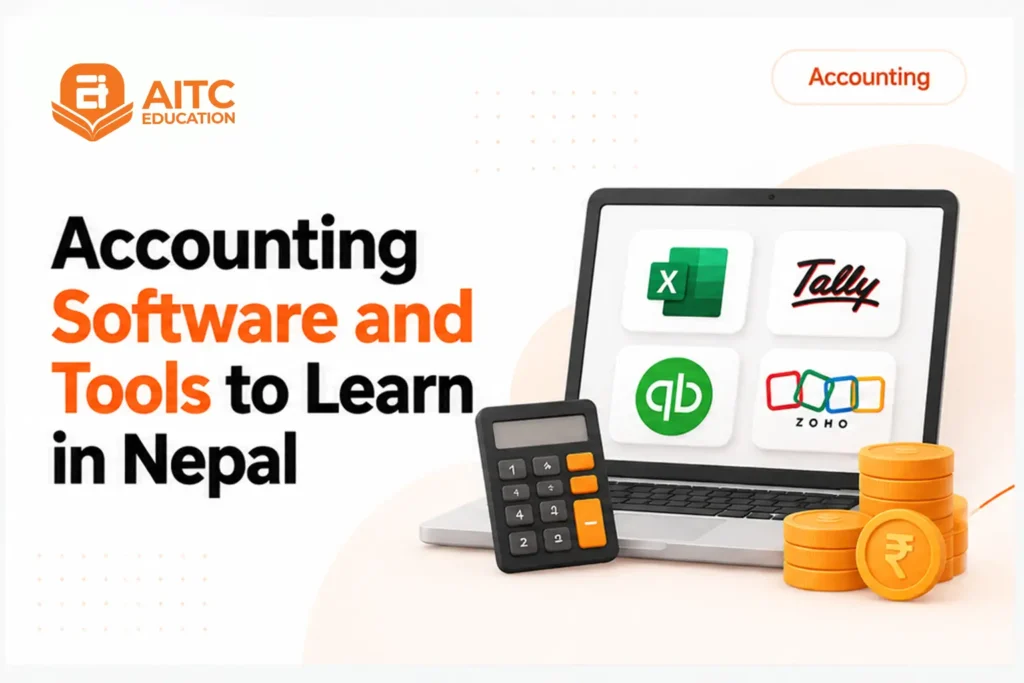
You do not need to learn every accounting software before applying for a job. For most beginners in Nepal, Tally/TallyPrime and Excel are practical starting points for building accounting software skills. You can then learn other systems based on the requirements of the roles you apply for.
1. Tally/TallyPrime
Tally/TallyPrime is a useful starting point for learning practical accounting software skills. You should be comfortable with tasks such as creating ledgers, recording sales and purchases, managing invoices, tracking expenses, and generating basic financial reports.
The goal is not simply to know where the different buttons are. You should understand how the accounting entries you make in the software affect the company’s financial records.
2. Advanced Excel
Excel is another important skill for accountants because it can be used to organize, check, calculate, and analyze financial data. Start with formulas, sorting and filtering, conditional formatting, and functions such as SUM, IF, SUMIF, and VLOOKUP or XLOOKUP.
As you become more comfortable, you can learn pivot tables and other tools for working with larger datasets. You do not need to master every Excel feature before applying for an accounting job. An employer may also ask you to organize financial data, use formulas to calculate figures, or identify an error in a spreadsheet.
3. IRD E-Filing
If your accounting role involves tax-related work, you should also understand how to use the Inland Revenue Department’s online systems. This can include working with VAT and TDS-related information and completing applicable online filing or submission tasks.
The exact requirements depend on the type of tax and the taxpayer’s situation, so learning how to find and follow the current IRD requirements is more useful than memorizing outdated procedures.
4. Other Accounting Software
Other accounting or ERP systems can be useful, but they do not need to be your first priority. The software you encounter will depend on the company, industry, and specific accounting role.
Once you are confident with the basics, learning another system becomes easier because the underlying accounting concepts remain similar. Focus first on becoming good at accounting tasks, rather than collecting knowledge of as many software programs as possible.
The Skill Almost Nobody Lists: Reading a Report, Not Just Producing One
Knowing how to prepare a financial report is only part of an accountant’s job. You should also be able to read the numbers, identify unusual changes, and understand what the report is telling you about the business.
1. Understand What the Numbers Mean
You should be comfortable reading basic financial statements such as the income statement, balance sheet, and cash flow statement. More importantly, you should understand what changes in revenue, expenses, assets, liabilities, and cash can indicate.
For example, if expenses suddenly increase while sales remain similar, you should be able to notice the change and investigate what caused it. This ability to question the numbers is more useful than simply producing a report and sending it to someone else.
2. Check for Errors and Unusual Figures
Accountants should know how to review reports for missing entries, unusual amounts, or figures that do not match supporting records. Comparing current figures with previous periods can help you spot changes that need further investigation.
You do not need to be a financial analyst to do this well. The important skill is being able to look at a report and ask, “Does this number make sense, and if not, why?”
3. Explain the Report Clearly
A good accountant should also be able to explain financial information to someone who does not work with numbers every day. This could mean explaining why expenses increased, why cash balances changed, or what a particular figure means for the business. The goal is to move beyond producing reports to understanding and communicating what those reports show.
Soft Skills That Actually Get Tested, Not the Generic Kind
Accounting jobs do not test only your technical knowledge. Employers also need people who can communicate clearly, handle deadlines, work carefully with financial information, and deal with clients, managers, and auditors without creating unnecessary problems.
1. Attention to Detail
Small mistakes can affect financial records, tax filings, and reports, so accountants need to work carefully. You should be able to check figures, documents, dates, and entries before submitting or sharing them.
2. Communication
Accountants often need to explain financial information to managers, clients, colleagues, or auditors. Being able to explain a problem clearly, ask the right questions, and communicate what is needed can make day-to-day accounting work much easier.
3. Time Management
Accounting work often comes with fixed deadlines for reports, payments, reconciliations, and tax-related tasks. You need to organize your work so that important tasks are completed on time instead of waiting until the deadline.
4. Problem-Solving
Not every transaction will match the records, and not every financial figure will make sense immediately. A good accountant should be able to investigate differences, find the cause of an error, and decide what needs to be corrected.
5. Professional Communication
Accountants may regularly communicate with clients, auditors, tax authorities, and other departments. Professional communication means responding clearly, keeping records of important information, and knowing when to ask for clarification rather than making assumptions.
For aspiring Chartered Accountants, ICAN also provides Advanced Management and Communication Skills (AMCS) training, which focuses on communication, management, and other professional skills.
These skills are practical rather than generic. You can demonstrate them through how you handle real accounting tasks, communicate during work, and respond when something in the records does not look right.
What’s Coming, Not Yet Required: AI and Automation Awareness
AI and automation are changing how some accounting tasks are completed, but you do not need to become an AI expert to start an accounting career in Nepal. For now, it is more useful to understand where these tools can assist accountants and where human review is still necessary.
1. Understand How AI Can Support Accounting
AI tools can help with tasks such as organizing financial data, identifying unusual transactions, summarizing reports, and reducing repetitive manual work. However, accountants still need to check the results because financial information must be accurate and errors can have serious consequences.
2. Learn to Work with Automation
You should understand the basic idea of automated accounting processes, such as recurring entries, invoice processing, report generation, and data transfer between systems. You do not need to learn advanced automation tools at the beginning, but being comfortable with technology can make it easier to adapt as accounting software becomes more automated.
3. Focus on Accounting First
AI awareness should come after the fundamentals. Build your bookkeeping, tax, reconciliation, reporting, Excel, and accounting software skills first, then learn how AI and automation can support those tasks. The goal is not to compete with technology. It is to become an accountant who understands the numbers and knows how to use modern tools without blindly trusting them.
Building these skills can help you prepare for different accounting roles as you gain experience. If you want to understand the career paths available in the field, explore our guide to accounting careers in Nepal.
Conclusion
Building an accounting career in Nepal requires more than knowing accounting concepts. Start with practical skills such as bookkeeping, VAT and TDS work, bank reconciliation, financial reporting, Excel, and accounting software, then build on them as you gain experience.
You do not need to master every tool at once. Focus on the skills most relevant to the roles you want, and gradually add more advanced technical, communication, and technology skills as your career develops.
If you want to build these skills through structured training, explore AITC Education’s advanced accounting training in Nepal to develop your practical accounting knowledge and prepare for workplace tasks.
Frequently Asked Questions
What skills do I need to become an accountant in Nepal?
You should understand bookkeeping, bank reconciliation, VAT and TDS processes, financial reporting, and basic accounting principles. Skills in Excel and accounting software such as Tally/TallyPrime can also help you handle practical accounting tasks.
Do I need to know Tally before applying for an accounting job in Nepal?
Not always. However, knowing Tally/TallyPrime can give you an advantage for roles that use the software, especially if you can use it for everyday accounting tasks rather than only knowing the basics.
What software should an accountant learn first in Nepal?
Tally/TallyPrime and Excel are good starting points for beginners. You should also become familiar with the Inland Revenue Department’s online systems if your role involves tax-related work.
Are soft skills important for accountants in Nepal?
Yes. Accountants need attention to detail, communication, time management, and problem-solving skills because they regularly work with financial information, deadlines, clients, managers, and auditors.
Do accountants in Nepal need to learn AI?
You do not need advanced AI skills to start an accounting career. It is more important to understand accounting fundamentals first and gradually learn how AI and automation can support routine accounting tasks.
What is the best way to improve accounting skills in Nepal?
Start by building your core accounting knowledge and practical skills, then practice with tools such as Tally/TallyPrime and Excel. Structured accounting training can also help you practice workplace tasks and build confidence before applying for accounting roles.