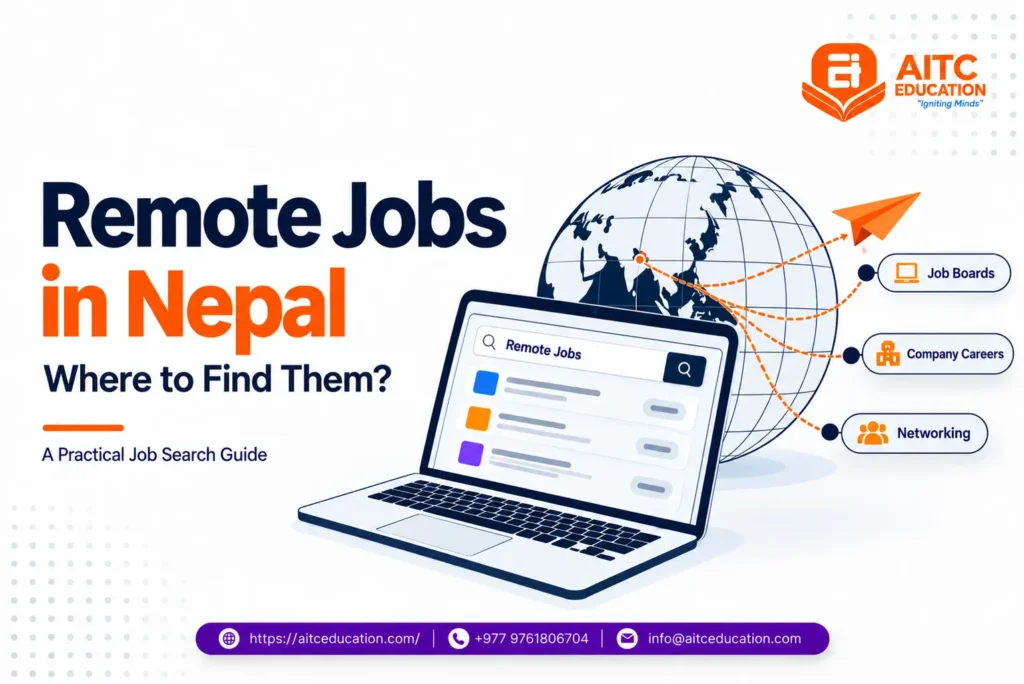
Finding remote jobs in Nepal can be harder than simply searching for “remote jobs.” Many listings use the word remote but may only hire people in certain countries or time zones, while others are actually freelance or contract opportunities rather than regular employment.
The good news is that Nepal-based job seekers can find remote opportunities with local and international companies across areas such as technology, marketing, design, content, customer support, and other digital roles. The key is knowing where to look and how to tell whether a job is genuinely open to candidates in Nepal.
This guide covers the best remote job platforms and job portals in Nepal, how to search for roles that accept Nepal-based applicants, and what you should know about time zones, remote employment, and freelance or contractor work.
Remote Work from Nepal: What’s Realistic in 2026?
Remote work from Nepal is an option in 2026, but not every remote job is open to people living in Nepal. Remote job platforms currently include Nepal-eligible roles across fields such as technology, marketing, support, data, and other professional areas.
A company may advertise a position as remote but limit applications to certain countries, regions, or time zones. Before applying, check whether the job description specifically accepts candidates based in Nepal rather than assuming that “remote” means you can work from any location.
1. Which Types of Jobs Can You Do Remotely from Nepal?
Remote opportunities are most common in roles where the work can be completed online and does not require the employee to be physically present. Depending on the employer and your skills, you may find remote positions in:
- Software development and IT
- Digital marketing and sales
- Content writing and editing
- Graphic and UI/UX design
- Customer support and operations
- Data, accounting, and administrative work
- Quality assurance and testing
- AI and language-related roles
Depending on the platform and current openings, you may find Nepal-focused remote roles across technical, business, creative, support, and other specialist areas. Some listings are full-time employee roles, while others are freelance or contract opportunities, so check the employment type before applying.
2. Why Time Zones Matter
Your location can still matter even when a job is fully remote. A company may expect you to work during its normal business hours or have a few hours of overlap with teammates in another country.
For example, a US-based employer may require some evening or nighttime availability from someone working in Nepal, while a European employer may have more overlap with Nepal’s daytime hours. Always check the listed working hours, required time-zone overlap, and whether the role is asynchronous before applying.
The safest approach is to look for jobs that explicitly mention Nepal, Asia-Pacific, worldwide, or your eligible region. If a listing only says “remote” without explaining where employees can be based, check the full job description or the company’s hiring policy before spending time on an application.
Best Platforms and Job Boards to Find Remote Jobs from Nepal
The best place to look depends on the type of remote job you want. International remote-job platforms can give you access to companies hiring across countries, while Nepal-focused job portals can be useful for employers that already recruit locally.
Platform | Best for | Why to know |
A wide range of remote jobs | Useful for searching remote roles by location, workplace type, job type, and experience level. | |
Himalayas | Remote-first and international jobs | Has location and time-zone filters and includes roles with specific location restrictions. |
Jobgether | Filtered and matched remote jobs | Has a dedicated Nepal remote-jobs page with filters for contract type, experience, industry, and other criteria. |
Arc | Technology and developer roles | Has a dedicated remote-jobs page for Nepal, with roles across software, data, AI, and related technical fields. Its listings can include both full-time and freelance positions. |
MeetFrank | International and location-flexible opportunities | Can be useful for exploring international roles, but check the location and eligibility requirements for each listing. |
Merojob | Jobs from employers recruiting in Nepal | Useful for finding opportunities from employers recruiting within Nepal, including remote or flexible positions when available. |
Kumarijob | Online and work-from-home jobs in Nepal | Has an online-jobs section covering areas such as IT, marketing, writing, and other roles. |
JobsNepal | Nepal-focused job searches | Another Nepal-focused job board worth checking for employers recruiting candidates in Nepal. |
The availability of listings changes frequently, so treat the table as a starting point rather than a fixed list of companies hiring at any particular time.
Himalayas has location and time-zone filters for remote jobs, while Jobgether has a dedicated Nepal page with employment-type filters such as permanent, freelance, part-time, and fixed-term roles. Arc is particularly relevant if you work in technology because its Nepal listings include software development, data, AI, and other technical roles, with both full-time and freelance opportunities appearing in its listings.
How to Use These Platforms More Effectively?
You do not need to apply everywhere. Start with two or three platforms that match your field and search for your specific role rather than only using “remote jobs.”
For example, a digital marketer could search for “remote digital marketing Nepal”, “SEO remote Nepal”, or “marketing specialist remote”. A developer could combine their technical skill with location terms such as “remote Python Nepal” or “software engineer remote Asia.”
Most importantly, read the location and employment requirements before applying. A listing marked remote may still be restricted to a particular country or region, while a listing marked worldwide may be open to candidates in Nepal. Some platforms also mix full-time employment with freelance or contract work, so check the employment type as well.
How to Actually Get Hired Remotely as a Nepali Candidate?
Finding a remote job is only the first step. Your application should make it clear that you have the skills for the role and can work effectively from Nepal while meeting the employer’s location and schedule requirements.
1. Search for Jobs That Actually Hire in Nepal
Before applying, check the location requirements, look for terms such as “Nepal,” “worldwide,” “global,” or “Asia-Pacific,” and check whether the employer requires a particular time-zone overlap. If the listing does not clearly state where candidates can be based, check the full job description or the employer’s hiring information.
You can also use location and remote-work filters when searching. LinkedIn lets you filter jobs by workplace type and location, while platforms such as Himalayas allow searches based on location and time zone.
2. Make Your CV and LinkedIn Profile Remote-Ready
Your CV should quickly show what you can do rather than simply stating that you are looking for remote work. Highlight the skills, tools, and experience that match the position, including relevant internships, projects, or previous work. For international roles, make your location clear and include your time zone when it is relevant to the position.
Keep your LinkedIn profile consistent with your CV and make your target roles clear. When applying for international positions, avoid hiding your location; instead, make it easy for an employer to see that you are Nepal-based and understand the requirements of working with an international team.
3. Show Proof of Your Skills
A portfolio can help a remote employer evaluate your abilities before an interview, especially for roles such as content writing, digital marketing, graphic design, UI/UX, and software development. Rather than listing only the tools you know, include examples that show what you have actually created or contributed to.
If you do not have professional experience yet, personal projects, academic work, internships, and volunteer work can still demonstrate relevant skills. Focus on explaining your contribution and the result of the project instead of filling your portfolio with a long list of skills.
4. Be Ready to Explain How You Work Remotely
Remote interviews may involve questions about how you manage deadlines, communicate with teammates, organize your work, and handle tasks without direct supervision. Be ready to give specific examples of how you have worked independently and collaborated online, even if that experience came from a project or university assignment.
Time-zone availability can also matter when working with an international team. If an employer requires several hours of overlap with its working day, be clear about when you are available and make sure you understand whether the role expects synchronous meetings or mostly asynchronous communication.
Remote Employee vs Independent Contractor: Know the Difference
A remote job does not automatically mean you are an employee. Remote describes where you work, while employee and independent contractor describe the type of working relationship you have with the company. Before accepting an offer, check which arrangement the employer is offering. The difference can affect how you are paid, what benefits you receive, and which tax or compliance responsibilities apply to you.
Remote employee | Independent contractor |
Works as an employee of the company | Provides services independently under a contract |
Usually works within the employer’s employment structure | Generally has more independence over how the work is carried out |
May receive employee benefits where applicable | Usually does not receive employee benefits |
Employer may handle payroll and related obligations depending on the arrangement | Contractor may be responsible for handling their own tax and compliance obligations |
Usually has an employment agreement | Usually works under a service or contractor agreement |
Why This Difference Matters in Nepal?
If a foreign company hires you as an employee, the employment arrangement may involve local payroll, employment, and compliance requirements. If it engages you as an independent contractor, you provide services under a contract rather than joining the company’s employee structure. Your tax and reporting responsibilities can differ depending on the arrangement and applicable Nepalese rules.
This is also why you should not assume that every international remote opportunity is simply a “remote job.” Some listings may actually be contractor positions, while others may be regular employment. If you are specifically looking for freelance/contract work, our guide covers how to find clients, set your rates, and manage your freelance work.
Because cross-border employment and income can have different tax and compliance implications, check the latest guidance from Nepal’s tax authorities or a qualified tax professional before accepting an international remote role.
Nepal’s gig economy includes independent and platform-based work, which is another reason to understand the difference between employment and contract work. Nepal Economic Forum has also discussed the growth and regulatory challenges of gig work in Nepal.
Conclusion
Remote jobs are an option for Nepal-based workers with skills that can be delivered online, but finding one requires more than searching for “remote jobs.” Check whether the employer accepts candidates in Nepal, understand the required time-zone overlap, and look closely at whether the position is an employee role or a contractor arrangement.
Start with the platforms that match your field, tailor your CV and portfolio to each role, and apply when you meet the location and employment requirements. If you are still weighing freelancing against a job, understanding the differences in flexibility, income, and working arrangements can help you decide which path fits your goals.
Frequently Asked Questions
How can I find a remote job while living in Nepal?
Use platforms such as LinkedIn, Himalayas, Jobgether, and Nepal-based job portals, and filter for roles that explicitly accept candidates in Nepal.
Which international companies hire remote workers from Nepal?
Some international companies recruit Nepal-based workers, but eligibility varies by employer and role. Check the company’s current job listing to confirm whether Nepal is an accepted location.
Are remote jobs from foreign companies legal and taxable in Nepal?
A foreign remote job can have tax and legal implications in Nepal, but the treatment depends on your employment arrangement and circumstances. Check the latest requirements with the relevant Nepalese authorities or a qualified tax professional.
What are the best remote job websites for Nepali job seekers in 2026?
LinkedIn, Himalayas, Jobgether, and Arc are useful international platforms, while Merojob, Kumarijob, and JobsNepal can help you find Nepal-focused opportunities.
Do I need a work visa to work remotely for a foreign company from Nepal?
If you are physically working from Nepal, you generally do not need a work visa for the foreign country simply because your employer is based there. However, the arrangement can still have tax, employment, and other legal requirements, so check the relevant rules before accepting the role.