Reviewed by: Digital Marketing Trainer
Social media has become one of the most effective ways for businesses to connect with customers. In Nepal, platforms like Facebook, Instagram, TikTok, YouTube, and LinkedIn are now widely used to discover brands, explore products, and interact with businesses.
For businesses, social media is more than just a place to post updates. It helps build brand awareness, engage with customers, generate leads, and support long-term business growth through both organic content and paid campaigns.
This beginner’s guide explains what social media marketing is, how it works, its main types and benefits, and how social media marketing in Nepal can help businesses grow. You will also learn the skills needed to get started and explore career opportunities in social media marketing.
What is Social Media Marketing ?
Social media marketing is the practice of using social media platforms to promote a brand, connect with customers, and achieve marketing goals. Businesses create and share content, interact with their audience, and run advertising campaigns to increase visibility and encourage people to take action.
Unlike traditional marketing, social media marketing allows businesses to communicate directly with their audience and build relationships over time. It can be used to increase brand awareness, generate leads, drive website traffic, support sales, and strengthen customer loyalty.
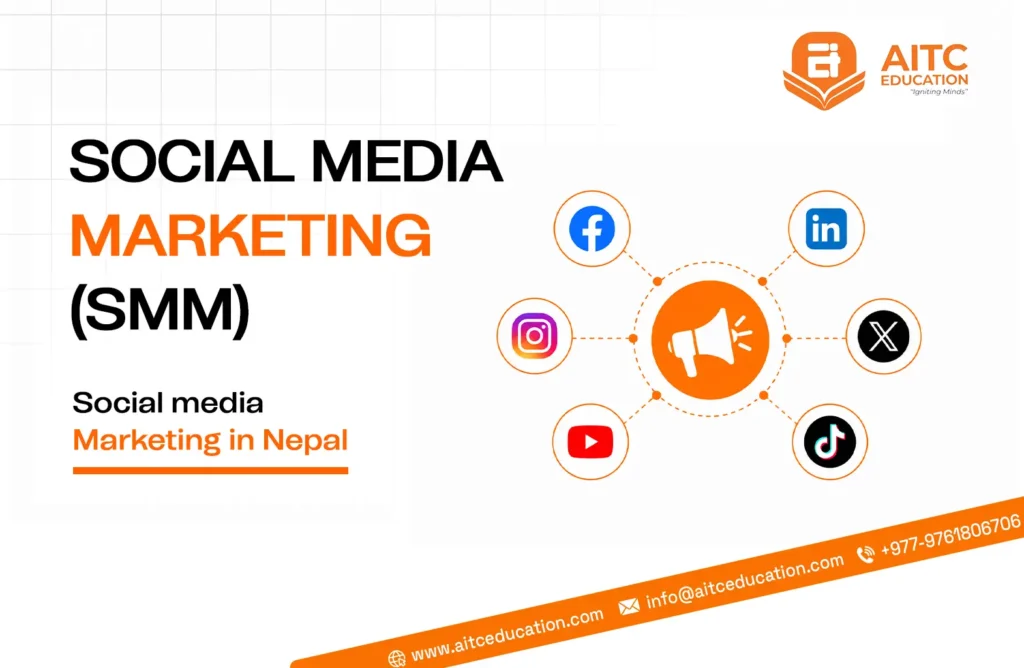
Popular social media marketing platforms include Facebook, Instagram, TikTok, YouTube, LinkedIn, X (formerly Twitter), and Pinterest. Each platform serves a different purpose and attracts different audiences, making it important for businesses to choose the channels that best match their goals.
Social Media Marketing vs. Digital Marketing
Social media marketing and digital marketing are closely related, but they are not the same. In simple terms, social media marketing is one part of digital marketing. Digital marketing is a broad field that includes every marketing activity carried out through digital channels, while social media marketing focuses specifically on promoting businesses through social media platforms.
Digital Marketing | Social Media Marketing |
Covers all digital marketing channels. | Focuses only on social media platforms. |
Includes SEO, PPC, email marketing, websites, and content marketing. | Includes organic posts, paid social ads, influencer marketing, and community management. |
Uses multiple online channels to achieve marketing goals. | Uses social media platforms to reach and engage audiences. |
Businesses often combine social media with other digital marketing channels such as SEO, email marketing, and paid advertising to create a complete digital marketing strategy.
How Does Social Media Marketing Work?
Social media marketing works by helping businesses attract the right audience, build relationships, and encourage meaningful actions through social media platforms. Rather than simply posting updates, businesses share valuable content, interact with their followers, and use paid advertising to reach people who are most likely to be interested in what they offer.
Most social media marketing follows a similar cycle: businesses create content, engage with their audience, promote posts when needed, and review the results to improve over time.
Benefits of Social Media Marketing for Businesses in Nepal
According to DataReportal’s Digital 2025 report, Nepal had 14.3 million active social media user identities in early 2025. With so many people active on these platforms, businesses of all sizes are using these platforms to connect with customers, promote their products or services, and grow their brand. Whether you’re a small local business or a large organization, social media marketing offers several advantages that support both short-term campaigns and long-term business growth.
1. Increase Brand Awareness
Social media helps businesses introduce their brand to a large audience and stay visible through consistent content and engagement. Regularly sharing valuable posts, videos, stories, and updates increases brand recognition and keeps a business top of mind when potential customers are ready to make a purchase.
2. Reach the Right Audience
One of the biggest advantages of social media marketing is the ability to reach people who are most likely to be interested in your products or services. Social media platforms allow businesses to target audiences based on factors such as location, age, interests, online behavior, and demographics.
Reaching a more relevant audience helps businesses use their marketing budget more efficiently while improving the chances of generating meaningful engagement and conversions.
3. Communicate Directly with Customers
Unlike many traditional marketing channels, social media encourages two-way communication. Businesses can respond to comments, answer questions, and interact with customers in real time. Regular interaction helps build stronger relationships with customers and shows that a business values their opinions and experiences.
4. Generate Leads and Drive Sales
Social media can support every stage of the customer journey, from creating awareness to encouraging purchases. Businesses can direct users to their websites, promote products, collect enquiries, generate leads through forms, and encourage purchases using both organic content and paid advertising. Many platforms also offer built-in tools that make it easier for interested users to take the next step.
5. Build Trust Through Social Proof
People are more likely to trust a business when they see positive experiences shared by others. Customer reviews, testimonials, user-generated content, and genuine interactions all contribute to building credibility and influencing purchasing decisions.
As more people engage with and recommend a business online, potential customers become more confident in choosing its products or services.
Organic vs. Paid Social Media Marketing
Businesses can grow on social media in two ways: through organic social media marketing and paid social media marketing. While both aim to reach and engage the target audience, they differ in how content is distributed and the speed at which results can be achieved.
What is Organic Social Media Marketing?
Organic social media marketing refers to the unpaid activities businesses use to build their presence on social media platforms. This includes publishing regular posts, sharing videos and stories, responding to comments, engaging with followers, and participating in conversations without paying to increase reach.
The goal of organic marketing is to build long-term relationships, strengthen brand awareness, and create a loyal community. Although it often takes time to grow an audience organically, consistent and valuable content can help businesses earn trust and maintain ongoing engagement.
What is Paid Social Media Marketing?
Paid social media marketing involves paying social media platforms to promote content or display advertisements to a selected audience. Businesses can target users precisely, helping them reach people who are more likely to be interested in their products or services.
Paid campaigns are commonly used to increase visibility, promote offers, generate leads, drive website traffic, or support sales within a shorter period. Since businesses control their budget, audience, and campaign objectives, paid advertising offers greater flexibility for achieving specific marketing goals.
Should Businesses Use Organic or Paid Social Media?
Organic and paid social media marketing are most effective when used together rather than as separate strategies. Organic content helps businesses build credibility, engage with their audience, and maintain a consistent online presence, while paid campaigns help expand reach and achieve faster results.
For most businesses, a balanced approach works best. Regular organic content builds trust over time, while paid promotions can be used to launch new products, promote important campaigns, or reach audiences beyond existing followers. Combining both strategies allows businesses to maximize their social media marketing efforts and support long-term growth.
Types of Social Media Marketing
Social media marketing includes a variety of approaches that businesses use to reach, engage, and convert their audiences. The right mix depends on your business goals, target audience, and the platforms you use.
1. Content Marketing
Content marketing involves creating and sharing valuable content that informs, entertains, or educates your audience. This can include images, videos, reels, stories, infographics, blog posts, and live sessions that encourage users to engage with your brand.
Rather than focusing only on promotions, content marketing helps businesses build trust, demonstrate expertise, and maintain long-term relationships with their audience.
2. Social Media Advertising
Social media advertising involves paying platforms such as Facebook and Instagram to display advertisements to a targeted audience. Businesses can define exactly who sees their ads, making it easier to reach the right audience.
This approach is commonly used to increase brand awareness, generate leads, drive website traffic, or promote products and services more quickly than relying on organic reach alone.
3. Influencer Marketing
Influencer marketing involves collaborating with content creators who have an established and engaged audience. Businesses partner with influencers to promote products or services in a way that feels authentic and relatable to their followers.
Depending on the campaign, businesses may work with nano, micro, or macro influencers to reach different audience segments and increase brand credibility.
4. Community Management
Community management focuses on building and maintaining relationships with followers through regular interaction. This includes responding to comments and messages, answering questions, participating in discussions, and encouraging conversations around the brand.
An active community helps improve customer satisfaction, strengthens brand loyalty, and creates a more positive brand experience.
5. Social Commerce
Social commerce allows customers to discover and purchase products directly through social media platforms without leaving the app. Features such as Facebook Shops, Instagram Shopping, TikTok Shop, and product tags make the buying process faster and more convenient, though availability varies by country, account, and platform.
As social commerce continues to grow, many businesses use it to reduce friction in the customer journey and encourage more purchases.
6. User-Generated Content (UGC)
User-generated content refers to photos, videos, reviews, or testimonials created by customers rather than the business itself. Sharing authentic customer experiences helps demonstrate how products or services are used in real life.
UGC often builds greater trust because potential customers are more likely to value recommendations from other users than promotional content from a brand.
7. Employee Advocacy
Employee advocacy encourages employees to share company updates, achievements, workplace culture, or industry knowledge through their personal social media accounts. This expands the brand’s reach while presenting a more authentic and human perspective.
It can also strengthen employer branding, increase credibility, and help businesses connect with audiences beyond their official social media pages.
Popular Social Media Marketing Platforms in Nepal
No single social media platform is suitable for every business. Each platform attracts different audiences, supports different content formats, and serves different marketing objectives. Understanding where your target audience spends time helps you choose the right platforms and create more effective marketing campaigns.
1. Facebook
Facebook remains one of the most widely used social media platforms in Nepal. Businesses use it to build brand awareness, share updates, engage with customers, run targeted advertising campaigns, and connect with local communities through pages and groups. It is suitable for businesses of all sizes and works well for both organic content and paid advertising.
2. Instagram
Instagram is ideal for businesses that rely on visual content, including fashion, beauty, food, travel, fitness, and lifestyle brands. Features such as Reels, Stories, and Shopping help businesses showcase products while encouraging audience engagement. Businesses often use Instagram to build brand identity and connect with younger audiences.
3. TikTok
TikTok allows businesses to reach audiences through short-form videos that focus on entertainment, education, and storytelling. Brands use the platform to increase visibility, showcase products or services, and participate in trends that encourage user engagement. Its recommendation algorithm also gives businesses the opportunity to reach new audiences even without a large follower base.
4. LinkedIn
LinkedIn is the leading platform for professional networking and B2B marketing. Businesses use it to share industry insights, recruit talent, build professional credibility, and connect with decision-makers. It is particularly valuable for technology companies, educational institutions, consultants, and service-based businesses.
5. YouTube
YouTube is the world’s largest video-sharing platform and an effective channel for long-form content. Businesses use it to publish tutorials, product demonstrations, customer testimonials, webinars, and educational videos that provide long-term value. Because YouTube content is searchable, videos can continue attracting viewers long after they are published.
6. X (Formerly Twitter)
X is commonly used for real-time updates, industry discussions, customer support, and sharing news. Although its audience in Nepal is smaller than Facebook or Instagram, it remains useful for businesses and organizations that want to participate in public conversations and engage with niche communities.
How to Choose the Right Social Media Platform?
Not every social media platform is suitable for every business. Choosing the right platform depends on your audience, the type of content you create, and the goals you want to achieve. Focusing on the platforms that best match your business often delivers better results than trying to maintain a presence everywhere.
1. Identify Where Your Audience Spends Time
The first step is understanding your target audience. Consider factors such as their age, interests, profession, location, and online behavior to determine which platforms they use most frequently, then focus your efforts there.
2. Match the Platform to Your Content Format
Different platforms are designed for different types of content. Some platforms are built for short-form video, others for long-form content or visual storytelling. Choosing one that suits your preferred format makes it easier to stay consistent.
3. Match the Platform to Your Marketing Goals
Your business objectives should also influence your platform choice. If your goal is to build brand awareness, platforms with strong organic reach and visual content may be suitable. If you’re focused on generating leads, professional networking, or driving website traffic, another platform may offer better opportunities.
Selecting platforms that align with your objectives helps you use your time and marketing budget more effectively.
4. Start with One or Two Platforms
Managing multiple social media accounts requires time, planning, and consistent effort. For most beginners and small businesses, it’s better to focus on one or two platforms and build a strong presence before expanding to others.
Once you understand what works for your audience and have a consistent content strategy, you can gradually add more platforms as your business grows.
How to Build a Social Media Marketing Strategy?
A successful social media marketing strategy is built on clear goals, consistent planning, and regular improvement. Following a structured approach helps businesses create content that connects with the right audience and supports their overall marketing objectives.
1. Set Clear Goals
Start by deciding what you want to achieve through social media marketing. Your goals might include increasing brand awareness, driving website traffic, generating leads, improving customer engagement, or boosting sales.
Having clear objectives makes it easier to choose the right platforms, create relevant content, and measure your success.
2. Understand Your Target Audience
Knowing your audience is essential for creating content that captures their attention. Research factors such as age, location, interests, online behavior, and the social media platforms they use most often.
The better you understand your audience, the easier it becomes to create content that addresses their needs and encourages engagement.
3. Create a Content Plan
Plan the type of content you want to publish and how often you will post. A balanced content mix may include educational posts, promotional content, customer stories, behind-the-scenes updates, videos, polls, and user-generated content.
Using a content calendar also helps maintain consistency and ensures your social media channels remain active.
4. Create Engaging Content
High-quality content is the foundation of every successful social media strategy. Focus on creating posts that provide value, encourage interaction, or solve your audience’s problems rather than publishing only promotional messages.
Clear visuals, compelling captions, and strong calls to action can also improve engagement and encourage users to take the next step.
5. Engage With Your Audience
Social media is designed for conversation, not one-way communication. Reply to comments, answer messages, acknowledge feedback, and participate in discussions to build stronger relationships with your audience.
Regular engagement helps businesses build trust while encouraging customers to remain connected with the brand.
6. Monitor Performance and Improve
Review your social media performance regularly to understand which content performs well and where improvements are needed. Track metrics such as reach, engagement, clicks, leads, and conversions to evaluate whether your strategy is achieving its goals.
Use these insights to refine your content, posting schedule, and campaigns so your social media marketing continues to improve over time.
How to Measure the Success of Your Social Media Marketing?
Creating and publishing content is only part of social media marketing. Regularly measuring performance helps businesses understand whether their efforts are achieving the desired results and identify areas for improvement. The metrics you track should always align with your marketing goals.
1. Reach and Impressions
Reach measures the number of unique people who have seen your content, while impressions show the total number of times your content has been displayed, including multiple views by the same person.
These metrics help businesses understand how widely their content is being distributed and whether their brand visibility is growing over time.
2. Engagement
Engagement measures how people interact with your content through likes, comments, shares, saves, clicks, and other actions. A high engagement rate often indicates that your content is relevant, valuable, and resonates with your audience.
Monitoring engagement also helps businesses identify the types of content their audience enjoys most, making it easier to refine future posts.
3. Leads and Conversions
If your goal is to generate enquiries or sales, it’s important to measure how many people take meaningful actions after interacting with your social media content. These actions may include filling out a contact form, subscribing to a newsletter, downloading a resource, or completing a purchase.
Tracking leads and conversions helps businesses understand whether their social media marketing is contributing to broader business objectives.
4. Cost per Result and Return on Ad Spend (ROAS)
For paid social media campaigns, businesses should also evaluate advertising performance. Cost per result shows how much is spent to achieve a specific outcome, such as a lead, click, or sale, while Return on Ad Spend (ROAS) measures the revenue generated compared with the amount spent on advertising.
These metrics help businesses evaluate campaign efficiency, allocate budgets more effectively, and optimize future advertising efforts.
The Role of AI in Social Media Marketing
Artificial Intelligence (AI) has become an important tool for businesses and marketers managing social media. Instead of replacing human creativity, AI helps automate repetitive tasks, generate ideas, and analyze performance, allowing marketers to work more efficiently.
Content Creation and Idea Generation
AI-powered tools can help generate content ideas, write captions, suggest hashtags, and create images or videos based on simple prompts. These tools are useful for overcoming creative blocks and producing content more quickly.
However, AI-generated content should always be reviewed and edited to ensure it matches the brand’s voice, remains accurate, and provides genuine value to the audience.
Content Planning and Scheduling
Many social media management platforms use AI to recommend the best times to publish content based on audience activity. Some tools also help organize content calendars and automate publishing, making it easier to maintain a consistent posting schedule.
This allows businesses to spend more time engaging with their audience instead of managing repetitive publishing tasks.
Performance Analysis
AI can analyze large amounts of campaign data to identify trends, highlight high-performing content, and provide recommendations for improvement. These insights help marketers make informed decisions about future content, audience targeting, and campaign optimization.
By using AI alongside human expertise, businesses can improve efficiency while continuing to create authentic and engaging social media experiences.
Common Social Media Marketing Mistakes to Avoid
Beginners often make simple mistakes that reduce the effectiveness of their social media marketing efforts. Avoiding these issues can help you build a stronger online presence and achieve better results.
- Posting without a clear strategy: Publishing content without defined goals or a content plan often leads to inconsistent results and missed opportunities.
- Trying to be active on every platform: Managing too many platforms at once can reduce content quality and make it difficult to stay consistent. Focus on the platforms where your audience is most active.
- Ignoring audience engagement: Social media is designed for conversations. Failing to respond to comments, messages, or feedback can weaken customer relationships.
- Publishing only promotional content: Constantly selling products or services can discourage followers. Balance promotional posts with educational, entertaining, or informative content.
- Posting inconsistently: Long gaps between posts can reduce visibility and audience engagement. A consistent posting schedule helps maintain an active online presence.
- Ignoring performance data: Without reviewing metrics such as reach, engagement, and conversions, it’s difficult to understand what works and where improvements are needed.
- Following trends without relevance: Not every viral trend is suitable for every business. Choose trends that align with your brand, audience, and marketing objectives.
Building a Career in Social Media Marketing in Nepal
Social media marketing has become one of the fastest-growing career paths within digital marketing. As businesses invest in building their online presence and engaging customers through digital channels, the demand for skilled social media marketers continues to grow. Companies across several industries in Nepal regularly hire professionals to plan, manage, and optimize social media campaigns.
Career opportunities include roles such as Social Media Executive, Social Media Manager, Community Manager, Content Creator, Influencer Marketing Executive, and Social Media Advertising Specialist. Besides full-time employment, many professionals in Nepal also work as freelancers, manage social media for multiple clients, or join digital marketing agencies, giving them the flexibility to build diverse careers.
Digital Marketing Training
Looking for digital marketing training in Nepal that goes beyond theory? Digital Marketing Fundamentals is built for students, job seekers,…

Social Media Marketing Training
Looking to build a career in social media marketing and help brands grow their online presence? Our Social Media Marketing…
Conclusion
Social media marketing has become an essential part of how businesses build their online presence, connect with customers, and achieve their marketing goals. By understanding how different platforms work, creating a clear strategy, and measuring your results, you can use social media to increase brand awareness, generate leads, and build long-term customer relationships.
Whether you’re a business owner looking to grow your brand or someone planning a career in digital marketing, developing social media marketing skills is a valuable investment. As social media continues to evolve, staying informed about new platforms, trends, and best practices will help you achieve better results over time.
Frequently Asked Questions
What is social media marketing in simple words?
Social media marketing is the process of using social media platforms to promote a business, connect with customers, and achieve marketing goals.
How do I start social media marketing?
Start by setting clear goals, understanding your target audience, choosing the right platforms, creating valuable content, and tracking your results to improve over time.
What are the main types of social media marketing?
The main types include content marketing, social media advertising, influencer marketing, community management, social commerce, user-generated content, and employee advocacy.
What are the core areas (or "pillars") of social media marketing?
The core areas typically include content creation, audience engagement, paid advertising, community building, and performance measurement. The exact areas may vary depending on your business goals.
How much does social media marketing cost for a small business?
The cost depends on your goals, platforms, and whether you use organic marketing, paid advertising, or both. Small businesses can start with a modest budget and scale their investment as they grow.
Is social media marketing a good career in Nepal?
Yes. As businesses across Nepal continue investing in digital marketing, the demand for social media marketing professionals is growing. With practical skills and hands-on experience, you can pursue opportunities in companies, agencies, or as a freelancer.