Reviewed by: Data Science Trainer
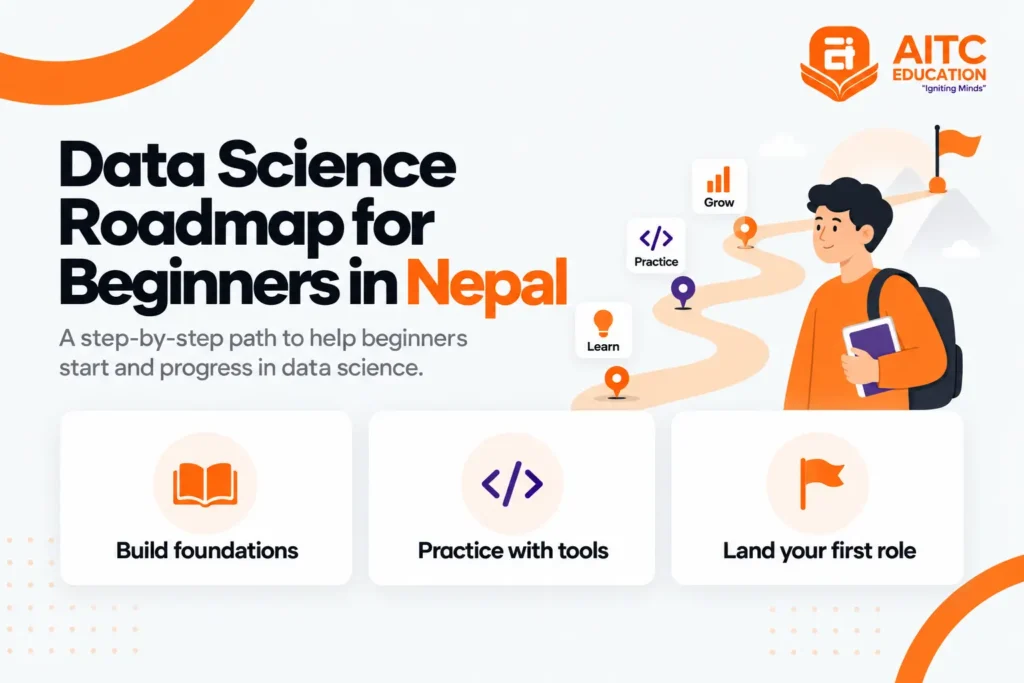
A data science roadmap is a step-by-step learning path that shows beginners what to learn, in what order, and how each skill connects to a career in data science. It is a map rather than a fixed syllabus, so you can adjust it based on your background, goals, and career path.
If you are starting data science in Nepal, knowing what to learn first can be just as difficult as learning the skills themselves. You may come across Python, statistics, SQL, Pandas, machine learning, and other tools without knowing where each one fits.
This roadmap gives you the bigger picture, from building your foundations to practicing with real data, creating projects, and preparing for data-related roles. Use it as a starting point, then explore each stage in more detail as you build your skills.
Data Science Roadmap: Step-by-Step Learning Path
A data science learning path usually moves from programming and statistical foundations to data analysis, machine learning, and practical projects. You do not need to master every skill before moving forward, but understanding how the stages connect can make your learning process much easier to manage.
1. Learn Python
Start with Python for data science because it is widely used for data analysis, automation, and machine learning. Focus first on programming fundamentals such as variables, data types, conditions, loops, functions, and working with basic data structures.
2. Build Statistics and Math Foundations
Learn the statistics and basic mathematics needed to understand data and interpret results. Start with concepts such as averages, probability, distributions, correlation, and basic statistical reasoning rather than trying to learn advanced mathematics immediately.
3. Learn SQL and Databases
SQL helps you work with data stored in relational databases, making it an important skill for many data-related roles. Practice retrieving, filtering, sorting, grouping, and combining data from different tables.
4. Learn Pandas and Data Analysis
Once you have basic Python and SQL skills, learn how to work with datasets using tools such as Pandas. Practice importing, cleaning, transforming, exploring, and analyzing data to find useful patterns and insights.
5. Practice Data Visualization
Learn how to communicate what you find in a dataset through charts and graphs. Tools such as Matplotlib, Seaborn, and Power BI can help you turn data into visual information that is easier to understand.
6. Learn Machine Learning
After building a foundation in programming, statistics, and data analysis, move into machine learning. Learn the basic ideas behind supervised and unsupervised learning, model training, evaluation, and common algorithms before moving into more advanced topics.
7. Build Real-World Projects
Projects help you turn individual skills into practical experience, so start with data science projects for beginners that let you practice working with real or realistic datasets.
8. Create a Portfolio and GitHub Profile
Use your projects to demonstrate what you can actually do. A portfolio or GitHub profile can showcase your code, analysis, visualizations, and problem-solving process to potential employers.
9. Prepare for Data Roles
Once you have a foundation and some practical projects, start exploring suitable entry-level opportunities. Depending on your skills and experience, these may include Data Analyst, BI Analyst, or junior data science roles.
The roadmap is not a strict sequence that every beginner must follow. Your starting point may depend on your existing education and technical skills, but these stages provide a practical framework for learning data science step by step.
Starting a Data Science Career in Nepal
Following a data science roadmap in Nepal requires more than learning technical skills in isolation. You also need to understand which roles are available, which skills employers commonly look for, and how you can turn your learning into practical experience.
- Start with related roles: Entry-level opportunities may be easier to find through roles such as Data Analyst or BI Analyst rather than targeting Data Scientist positions immediately.
- Prioritize SQL: SQL is an important practical skill for working with databases and is relevant across many data and analytics roles.
- Build practical experience: Projects, internships, and portfolio work can help you demonstrate how you apply data skills to real problems.
- Consider structured learning: If you are new to data science, structured courses can provide a guided learning path, practical exercises, and support from instructors as you develop your skills. This can make it easier to connect concepts such as Python, SQL, statistics, and machine learning with practical applications.
As you build experience and strengthen your skills in Python, SQL, statistics, data analysis, and machine learning, you can move toward more specialized data science roles or explore related career paths.
Data Science Training
Looking to build a career in data science and turn data into valuable business insights? Our Data Science Training in…
Data Science with Python Training
This program is built for absolute beginners who want to develop practical data science skills and prepare for entry-level careers…
Conclusion
A data science roadmap gives you a clear direction for building the skills needed for a career in data science. Start with the fundamentals, practice with real data, build projects, and gradually move toward more advanced skills such as machine learning.
If you are starting in Nepal, remember that you do not need to begin with a Data Scientist title. Roles such as Data Analyst and BI Analyst can help you gain practical experience while you continue developing your data science skills.
Frequently Asked Questions
What is a data science roadmap?
A data science roadmap is a step-by-step learning path that shows beginners which skills and tools to learn and how they connect to a career in data science.
How do I learn data science step by step?
Start with Python, statistics, and SQL, then learn data analysis with tools such as Pandas, practice data visualization, learn machine learning, and build practical projects.
How do I get into data science in Nepal?
Start by building core skills in Python, SQL, statistics, and data analysis, then gain practical experience through projects, internships, or entry-level roles such as Data Analyst or BI Analyst.
Should I follow a data science roadmap if I want to become a Data Analyst?
You can use many of the same foundational skills, but a Data Analyst roadmap usually focuses more on SQL, data analysis, spreadsheets, reporting, and visualization, while data science adds areas such as statistics and machine learning.
Is data science a good career in Nepal?
Yes. Data science can lead to opportunities in data analysis, business intelligence, machine learning, and other data-related roles in Nepal, as well as remote opportunities with international employers.