
Students in Nepal can earn anywhere from around NPR 5,000 to NPR 50,000+ per month through online work, freelancing, internships, and other flexible opportunities, depending on their skills and experience. However, many students don’t know where to start, which jobs are worth pursuing, or how to find genuine opportunities while balancing their studies.
If you’re wondering how students can secure jobs while studying in Nepal, this guide will help you get started. You’ll learn about the legal considerations, the best part-time and online jobs for students, the skills employers value most, where to find opportunities, how to build a strong student CV, and how to avoid common job scams.
Why Nepali Students Work While Studying
The benefits of part-time jobs in Nepal go beyond earning extra income. Many students work while studying to gain practical experience, develop professional skills, and become more competitive when applying for internships or full-time jobs after graduation.
Some of the biggest benefits include:
- Financial independence: Earn money to help cover tuition fees, transportation, study materials, or daily expenses while reducing dependence on family.
- Work experience before graduation: Build practical experience that strengthens your CV and helps you stand out to employers after completing your studies.
- Skill development: Improve communication, teamwork, problem-solving, time management, and customer service skills through real workplace experience.
- Professional networking: Connect with employers, colleagues, mentors, and industry professionals who may recommend future internships or job opportunities.
- Career exploration: Try different roles to discover your interests, strengths, and the career path that suits you best before entering the workforce full-time.
- Portfolio building: Students working in areas such as content writing, digital marketing, graphic design, or web development can create a portfolio that demonstrates their skills to future employers or freelance clients.
- Greater confidence and independence: Managing work alongside studies helps students become more responsible, adaptable, and prepared for the expectations of professional life.
Gaining practical experience early can also help you avoid many of the challenges fresh graduates face when entering the job market. Learn more in our guide on Why Many Graduates Struggle to Find Work.
Is It Legal? What Students in Nepal Should Know Before Taking a Job
Yes, students in Nepal can legally work while studying. There are no laws that prohibit college or university students from taking part-time jobs, internships, or freelance work while pursuing their education. However, it is important to choose opportunities that do not interfere with your academic responsibilities.
Before accepting a job, keep the following points in mind:
- Balance work with your studies: Choose flexible jobs that fit around your class schedule and leave enough time for assignments, exams, and other academic commitments.
- Check your college’s policies: Some colleges may have attendance requirements, internship guidelines, or scholarship conditions that students are expected to follow. Review these policies before accepting a job.
- Understand your employment terms: If you’re taking a job or internship, ask for a written agreement that clearly outlines your role, working hours, salary, and responsibilities.
- Know your rights as an employee: Nepal’s labour law recognizes part-time employment, allowing students to gain work experience while continuing their education. You should also ensure that your employer provides fair working conditions and follows the agreed terms of employment.
Working while studying can be a valuable way to build experience and earn an income. By choosing the right opportunity and managing your time effectively, you can gain practical skills without compromising your education.
Types of Part-Time and Skill-Based Jobs for Students in Nepal
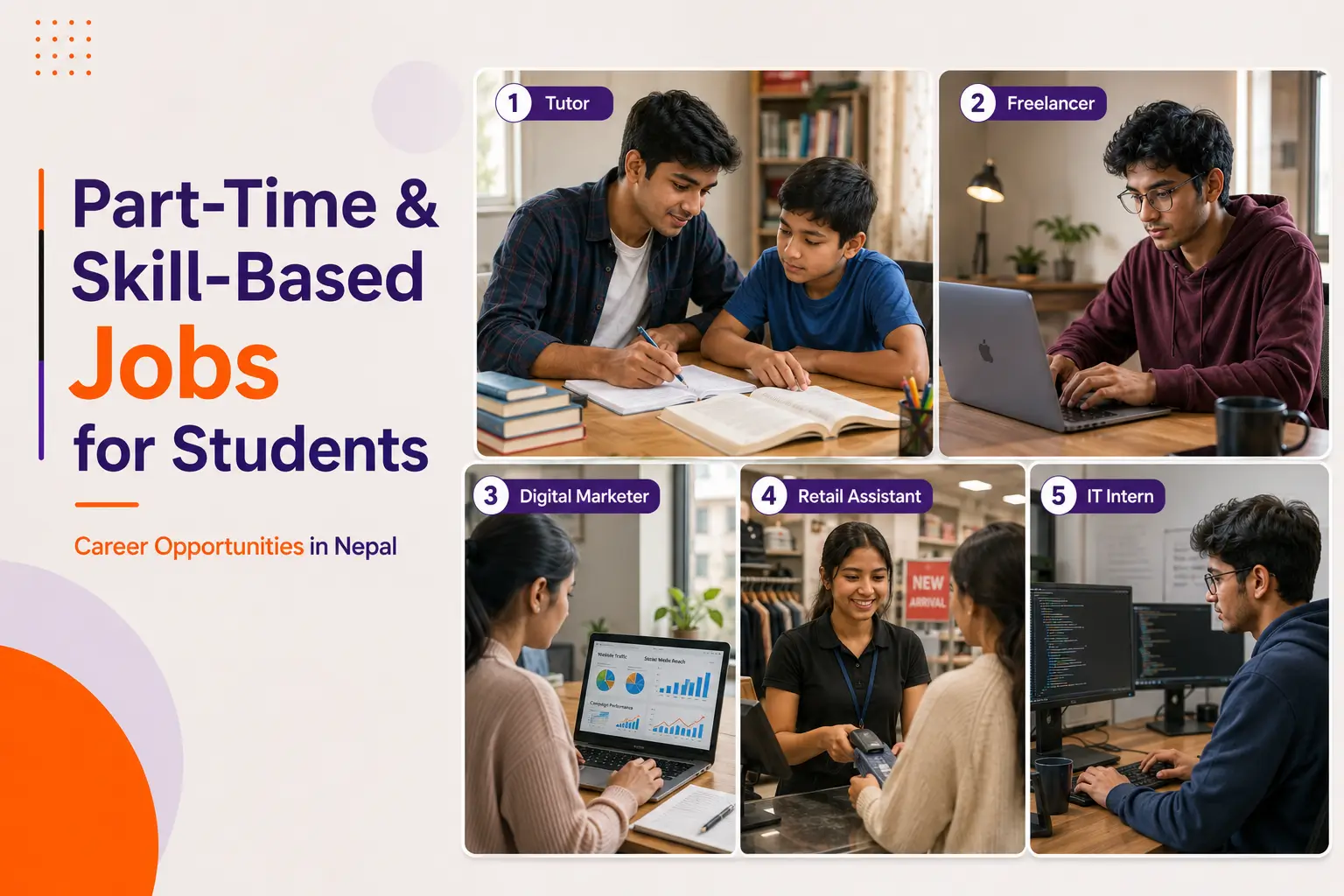
Understanding how students can secure jobs while studying in Nepal starts with choosing the right type of work. Students can choose from traditional part-time jobs, online freelance work, internships, and skill-based roles depending on their interests, schedules, and career goals. The table below compares some of the most popular options available in Nepal.
Note: The salary ranges below are estimated based on publicly available information from Nepali education and career platforms. Actual earnings vary depending on experience, skills, employer, location, and working hours.
Job Type | Avg Monthly Pay | Hours/ Week | Skill Required | Remote/ On-Site |
Tutoring & Teaching | 5,000-15,000 | 5-15 | Subject expertise | Both |
Content Writing | 8,000-20,000+ | 15-30 | Writing, research, SEO basics | Remote |
Data Entry & Virtual Assistant | 10,000-15,000+ | 20-30 | Typing, MS Office, organization | Mostly Remote |
Digital Marketing & SEO | 15,000-30,000+ | 15-30 | SEO, social media, ads | Both |
Graphic Design & Video Editing | 15,000-40,000+ | 15-30 | Canva, Adobe, CapCut | Mostly Remote |
Web/ App Development Freelancing | 20,000-80,000+ | Flexible | Programming | Remote |
Retail & Campus Jobs | 8,000-20,000 | 20-30 | Customer service | On-Site |
IT Internships | 8,000-20,000 | 20-40 | Technical fundamentals | Mostly On-site |
Tutoring & Teaching
Tutoring is one of the most popular part-time jobs for students in Nepal because it offers flexible working hours and requires little investment to get started. Students can teach school-level subjects such as Mathematics, Science, English, or Accountancy during evenings or weekends.
Besides earning an income, tutoring helps improve communication, presentation, and leadership skills. It is also a great option for students who enjoy teaching and want a predictable part-time schedule.
Content Writing
Content writing is among the most accessible online jobs for students in Nepal. Businesses, blogs, and digital agencies regularly hire freelance writers to create articles, website content, product descriptions, and social media posts.
Those with good writing skills can gradually build a portfolio while earning from freelance projects or part-time roles. Learning basic SEO can also increase job opportunities and earning potential.
Data Entry & Virtual Assistant
Data entry and virtual assistant roles are ideal for students who have good computer skills and attention to detail. Common tasks include updating spreadsheets, managing emails, scheduling appointments, organizing documents, and conducting online research.
Many of these positions are remote, allowing students to work from home while balancing their academic schedules. As you gain experience, you can move into higher-paying administrative or executive assistant roles.
Digital Marketing & SEO
Digital marketing offers opportunities in social media management, SEO, content marketing, paid advertising, email marketing, and analytics. Many startups, agencies, and small businesses hire students to support their marketing activities on a part-time or freelance basis.
This field is particularly valuable because it combines income with practical experience. Students can develop job-ready skills that lead to internships, freelance projects, or full-time digital marketing careers after graduation.
Graphic Design & Video Editing
Creative students can earn by designing social media posts, presentations, logos, marketing materials, or editing short-form videos. The growing demand for digital content has created more opportunities for freelance designers and video editors.
Learning tools such as Canva, Adobe Photoshop, Illustrator, Premiere Pro, or CapCut can significantly improve your chances of finding clients and increasing your earnings over time.
Web/ App Development Freelancing
IT or Computer Science students can take on freelance web development, app development, or website maintenance projects while studying. These projects allow them to apply classroom knowledge to real-world business requirements.
A strong portfolio often matters more than prior work experience in this field. Freelancing also helps students build technical confidence and prepare for future software development roles.
Retail & Campus Jobs
Retail stores, cafes, restaurants, bookstores, and campus-based businesses frequently hire students for evening or weekend shifts. These jobs are suitable for students looking for stable part-time income without requiring specialized technical skills.
Although the pay may be lower than skill-based work, retail roles help students develop customer service, teamwork, communication, and workplace professionalism.
IT Internships
Unlike part-time jobs that mainly focus on earning an income, IT internships are designed to build professional experience. Students gain hands-on exposure in areas such as software development, networking, cybersecurity, technical support, data analysis, and digital marketing, while some companies also offer paid internships or monthly stipends.
For students planning a career in technology, internships are often one of the best ways to enter the industry. They strengthen technical skills, expand professional networks, and can improve your chances of securing a full-time role after graduation. Read our Entry-Level IT Jobs and Salary in Nepal guide to explore popular roles and salary expectations.
Skills that Get Nepali Students Hired Faster
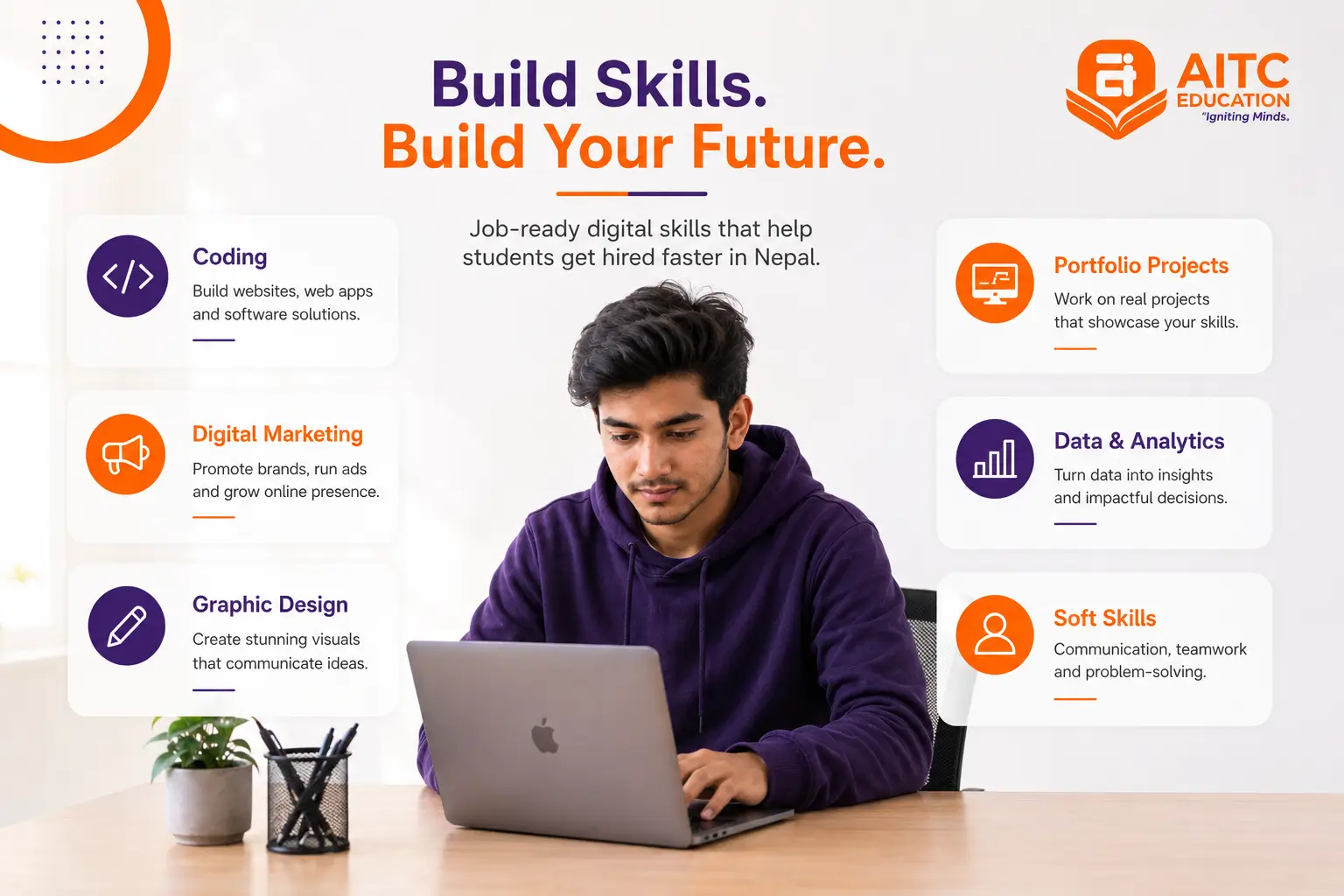
Having the right qualifications is important, but employers also look for practical abilities that allow students to contribute from day one. Developing the right skills to get a job in Nepal can improve your chances of securing part-time work, internships, freelance projects, and full-time opportunities after graduation.
Digital & Technical Skills
Digital skills are among the most valuable in today’s job market. Learning coding, SEO, digital marketing, graphic design, video editing, data analysis, or productivity tools can help you qualify for both remote and on-site roles.
Even if you are not pursuing a technology degree, developing practical digital skills can open doors to freelance projects and flexible part-time jobs while you’re still studying.
Communication & English Proficiency
Strong communication skills are essential in almost every industry. Employers value students who can communicate clearly with customers, colleagues, and clients through both written and spoken English.
Improving your presentation skills, professional email writing, and confidence during interviews can also make a positive impression when applying for internships or entry-level positions.
Time Management
Balancing classes, assignments, exams, and work requires effective time management. Students who can organize their schedules, meet deadlines, and prioritize tasks are often better prepared to handle workplace responsibilities.
Using calendars, to-do lists, or productivity apps can help you stay organized without compromising your academic performance.
Building a Portfolio
A portfolio allows employers to see what you can do, even if you have little or no work experience. Writers can showcase published articles, designers can display creative projects, developers can share websites or applications, and digital marketers can present campaign results or case studies.
Structured, project-based training can help you build this portfolio much faster. Courses in digital marketing, SEO, web development, and other practical fields give you the opportunity to complete real-world projects that demonstrate your skills to employers. If you’re looking to build job-ready experience, explore AITC Education’s courses in Digital Marketing, SEO, or Web Development.
Where to Find Part-Time Jobs and Internships in Nepal
Knowing where to find part-time jobs in Nepal can save you time and help you avoid unreliable opportunities. While many students rely on social media or word of mouth, using trusted job platforms and professional networks can significantly improve your chances of finding genuine part-time jobs, internships, and freelance projects.
Some of the best places to look include:
- Job portals: Trusted job portals such as MeroJob, KumariJob, FroxJob, and Jobejee regularly advertise part-time jobs, internships, freelance opportunities, and entry-level positions across industries. Creating profiles on these platforms and setting up job alerts can help you stay updated on new openings that match your skills and availability.
- LinkedIn: Build a professional profile, connect with recruiters, and follow companies you’re interested in. Many employers advertise internships and part-time openings directly on LinkedIn.
- Company career pages: Many organizations publish vacancies only on their official websites. If there’s a company you’d like to work for, regularly check its Careers page for new opportunities.
- College career cells: Many colleges organize career fairs, internship programs, employer networking events, and campus recruitment activities that can help students secure their first professional experience.
- Training institute placement support: Institutes with dedicated placement assistance often connect students with hiring companies, internship opportunities, and industry partners. Services such as career counselling, CV reviews, interview preparation, and employer referrals can make it easier to secure your first role. Learn more about AITC Education’s Placement Support and how it helps students transition from training to employment.
Rather than relying on a single platform, use a combination of job portals, networking, company career pages, and placement support to increase your chances of finding quality opportunities that match your skills and schedule.
How to Build a Student-Friendly CV and Apply Successfully
A well-written student CV Nepal employers can quickly understand can make a strong first impression, even if you have limited work experience. Keep your CV concise, relevant, and focused on the skills and experiences that match the role you’re applying for.
Use this checklist before sending your application:
- Include accurate contact information: Add your full name, phone number, professional email address, and LinkedIn profile (if available). Make sure recruiters can easily reach you.
- Highlight your education: Mention your current college, degree or course, expected graduation date, and any relevant academic achievements.
- Showcase your skills with proof: List technical and soft skills that match the job, and whenever possible, include links to your portfolio, GitHub, LinkedIn, writing samples, design projects, or personal website.
- Mention relevant coursework and certifications: Include short courses, workshops, or certifications related to the position, especially if they demonstrate practical skills in areas such as digital marketing, programming, graphic design, or data analysis.
- Write a clear career objective: A one or two-line objective explaining your career interests and what you hope to contribute helps employers understand your goals.
- Include projects and extracurricular activities: Academic projects, volunteering, student clubs, competitions, or freelance work can demonstrate initiative and transferable skills, even if you haven’t held a formal job before.
- Tailor your CV for every application: Read the job description carefully and emphasize the skills and experiences that are most relevant to that specific role.
Finally, proofread your CV before submitting it. A clear, error-free CV shows professionalism and improves your chances of being shortlisted for interviews. A strong portfolio can further strengthen your application. Read our guide on How to Build an IT Portfolio as a Beginner in Nepal to get started.
Avoiding Job Scams: Red Flags Every Student Should Watch For
Unfortunately, not every job advertisement is genuine. Students looking for internships or part-time work are often targeted by fake recruiters and fraudulent companies. Before accepting any offer, watch out for these common warning signs:
- Upfront payment requests: Legitimate employers do not ask candidates to pay registration fees, training fees, security deposits, or processing charges before offering a job.
- Vague job description: Be cautious if the employer cannot clearly explain the role, responsibilities, working hours, or salary.
- Unrealistic salary promises: Advertisements that promise extremely high earnings for little work or no experience are often too good to be true.
- Pressure to make quick decisions: Scammers may ask you to accept the offer immediately or threaten that you’ll lose the opportunity if you don’t respond quickly.
- No company information: Verify the employer’s website, office address, social media presence, and contact details before applying or attending an interview.
- Requests for sensitive personal information: Avoid sharing your bank details, citizenship documents, passwords, or other confidential information before confirming that the employer is genuine.
- Unprofessional communication: Poorly written emails, unofficial messaging accounts, or recruiters who refuse to answer your questions should be treated as warning signs.
If something feels suspicious, trust your instincts and verify the company before moving forward. Taking a few minutes to research an employer can help you avoid scams and focus on genuine career opportunities.
Balancing Work and Studies: Practical Tips

Learning to balance work and study is one of the biggest challenges students face. The goal isn’t to work as many hours as possible but to gain experience and earn an income without affecting your academic performance.
Here are some practical tips to help you manage both successfully:
- Start with 10 to 15 hours per week: If you’re taking your first job, begin with a manageable schedule and increase your workload only if you can comfortably balance your studies.
- Prioritize your academics during exams: Reduce your working hours or take leave when preparing for exams, major assignments, or important presentations.
- Communicate your availability clearly: Let your employer know your class schedule and exam dates in advance. Most student-friendly employers appreciate honest communication.
- Create a weekly schedule: Plan your classes, work shifts, study sessions, and personal time using a calendar or planner to avoid last-minute stress.
- Choose flexible work whenever possible: Freelancing, tutoring, internships, or remote jobs often provide greater flexibility than fixed-shift roles.
- Avoid taking on too many responsibilities: Working multiple jobs or accepting more freelance projects than you can handle may affect both your academic performance and the quality of your work.
- Take care of your health: Get enough sleep, eat well, and schedule breaks to avoid burnout. Maintaining your physical and mental well-being is just as important as earning extra income.
A part-time job should support your education, not compete with it. By managing your time wisely and setting realistic expectations, you can gain valuable work experience while staying focused on your long-term academic and career goals.
Conclusion
Finding a job while studying is about more than earning extra income. The right opportunity helps you build practical skills, strengthen your CV, expand your professional network, and prepare for your future career.
If you’re just getting started, focus on learning in-demand skills, building a portfolio, and applying consistently. Structured, project-based training can help you become job-ready faster by giving you practical experience that employers value.
If you’re ready to build career-focused skills, explore AITC Education’s courses in digital marketing, SEO, web development, data science, and other IT fields. You’ll gain hands-on experience, work on real projects, and receive career guidance to help you move from learning to earning. Start your journey today and discover how students can secure jobs while studying in Nepal through the right skills and practical training.
Frequently Asked Questions
Can college students legally work part-time in Nepal?
Yes. College students in Nepal can legally work part-time, freelance, or take internships while studying.
How much can a student earn from a part-time job in Nepal?
Most students earn between NPR 5,000 and NPR 50,000+ per month, depending on the job, skills, and working hours.
What is the easiest online job for a student in Nepal?
Content writing, data entry, virtual assistant roles, online tutoring, and social media management are good options for beginners.
Do I need a work permit for part-time jobs in Nepal?
No. Nepali citizens do not need a work permit to take part-time jobs within Nepal.
How can I avoid job scams as a student?
Avoid jobs that ask for upfront payments, promise unrealistic salaries, or provide vague job descriptions. Always verify the employer before applying.
Where can students find genuine part-time jobs and internships in Nepal?
Use trusted platforms like MeroJob, KumariJob, FroxJob, Jobejee, LinkedIn, company career pages, and college career cells.